
The Future of Shipping
Cleaner Fuel Options for the Maritime Sector
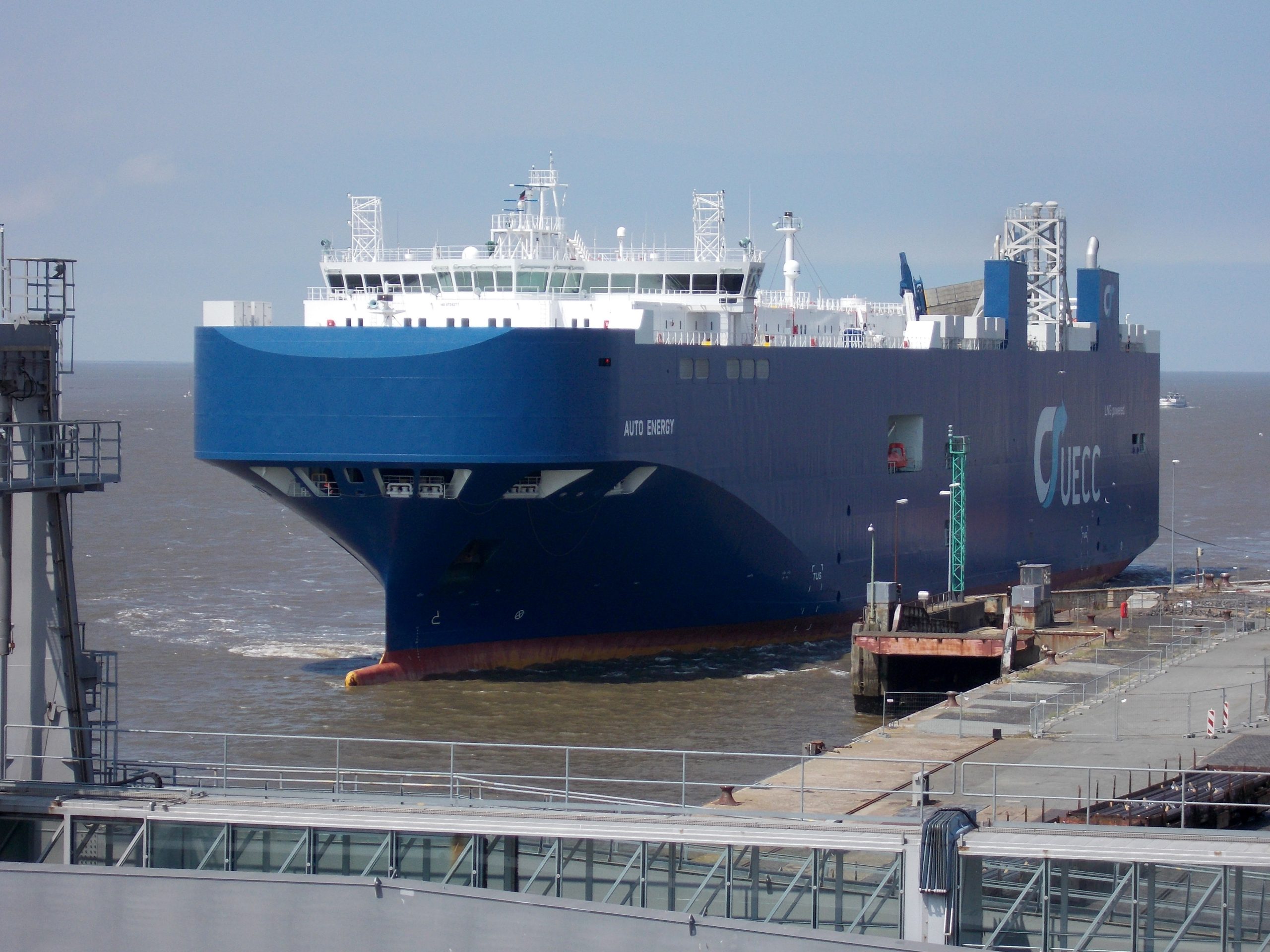
Photo credit: Tvabutzku1234/Wikimedia Commons, Creative Commons 1.0
Executive Summary
Maritime shipping is the backbone of global commerce, moving around 90% of all internationally traded goods. The global merchant fleet comprises over 106,000 commercial vessels, almost all of which run on fossil fuels – primarily heavy fuel oil (HFO), marine diesel oil (MDO), and marine gas oil (MGO). This is starting to change as pressure grows on the maritime sector to adopt cleaner fuels, but challenges remain.
Section I of this Energy Vision report provides an overview of the maritime sector, including its massive fuel consumption and its environmental, climate, and public health impacts. Maritime shipping consumes over 87 billion gallons of marine fuel annually and is responsible for almost 3% of total global greenhouse gas (GHG) emissions – enough that, if it were evaluated as a country, it would rank among the top seven emitters in the world.
Beyond its climate and environmental impacts, shipping poses serious public health risks from emissions of nitrogen dioxide, sulfur dioxide, and fine particulate matter. Elevated concentrations of these pollutants are linked to higher rates of respiratory and cardiovascular disease, and fall disproportionately on local communities in and around port cities.
Yet decarbonizing maritime shipping is among the most difficult industrial challenges of our time. Long travel distances, limited onboard fuel storage, scarce refueling opportunities, and the need for energy-dense fuels all constrain the pace of transition.
Nevertheless, the urgency for change is growing. The International Maritime Organization (IMO) projects that maritime trade could increase 40-115% by 2050 relative to 2020 levels. Compounding this, the raw materials and equipment needed for the global clean energy transition – from rare earth minerals to wind turbines – will themselves largely be transported by sea, meaning the maritime sector must grow substantially even as pressure to decarbonize it intensifies.
In Section II we analyze the suite of low-carbon alternative fuels that are now gaining real traction for long-distance shipping, although high costs and limited availability remain near-term obstacles. These options include:
- Renewable diesel and biodiesel. These "first generation" drop-in biofuels are already compatible with existing engine infrastructure and can be deployed today.
- Bio-liquefied natural gas (bioLNG) and biomethanol. These "second generation" fuels require new engines (primarily dual-fuel with diesel) and are increasingly being deployed.
- Green hydrogen, green ammonia, and e-fuels. These "next generation" fuels are made with renewable electricity and captured CO2. Apart from e-diesel, they not only require their own dedicated engines or dual-fuel engines with diesel, but they also face many challenges with cost, scalability, and supply.
Every non-petroleum fuel option involves tradeoffs relative to cost, climate impacts, performance, infrastructure requirements, and scalability.
Low-carbon biofuels, particularly first and second generation options like renewable diesel, biomethanol, and bioLNG, offer the most feasible near-term pathways for significant emissions reductions. While they too face challenges and tradeoffs, they are available, deployable now, and already proven at scale on some of the most demanding trade routes in the world. Next generation fuels like green ammonia are still years and billions of dollars away from being ready at the necessary scale, but they are expected to grow in importance through the 2030s and beyond as policy support, infrastructure, and markets mature.
Notably, this report finds that fuels derived from food waste and livestock manure – including bioLNG, biomethanol, and green ammonia – provide the deepest lifecycle emissions reductions (see chart below), though at higher costs today than fuels derived from other organic feedstocks.
Section III provides an overview of deployments of ships capable of running on alternative fuels so far, including of the two most numerous types – LNG and methanol – as of early 2026. Of the 106,000 commercial ships in the global fleet, just over 1,300 currently use alternative fuels, but that number is growing, and low-carbon versions of those fuels are becoming more readily available.
We then detail how regulatory pressure and policy measures are rising from the European Union and, to a less certain degree, the IMO, to address the slow pace of alternative shipping fuel adoption. The EU currently has the most stringent maritime decarbonization regulations in the world, with penalties tightening over time for GHG emissions. This is already driving real change in the sector, with orders for alternative-fueled ships rising each year.
Even outside the EU, some form of binding maritime emissions requirements are likely to come in the future, whether globally through the IMO's proposed Net-Zero Framework or in other regional/national jurisdictions. Fleet owners are now facing a fundamental calculation: bear the escalating costs of non-compliance – and inherent price volatility associated with petroleum-derived fuels – each year or invest now in vessels that will have much lower emissions over their 30-year operational lifespans.
Section IV underscores the encouraging progress in private sector initiatives. Many leading global consumer product companies, including Amazon, Patagonia, and Nestlé, as well as major shippers like Maersk, Hapag-Lloyd, Fortescue, United European Car Carriers, and others are stepping forward, embarking on their own clean fuel programs. Challenges and tradeoffs are prevalent, but so are emerging solutions, including ways to cut problematic "methane slip" from LNG engines.
Advancing this maritime revolution will require large investments from major companies, policy innovations, and creative financing strategies. As Section V shows, the financial challenge may be more manageable than it appears. Even among the more expensive cleaner fuel options, the incremental cost per consumer product shipped can be remarkably small. For example, a $300 premium per twenty-foot equivalent unit (TEU) cargo container on a trans-Pacific route – a high-end estimate – would translate to roughly $0.12 per pair of sneakers, $0.003 per smartphone, or less than a tenth of a cent per toothpaste tube.
This reframing illustrates that large companies with significant shipping volumes are well-positioned to absorb or share these costs – particularly through collaborative mechanisms such as the Zero Emission Maritime Buyers Alliance (ZEMBA) and flexible pricing programs. A few cents per end product can translate into thousands of tons of avoided emissions.
Ultimately, accelerating maritime decarbonization will require a portfolio approach grounded in first and second generation biofuels alongside continued investment and innovation in next generation alternatives. With the right combination of policy support, private sector leadership, and innovative financing, a cleaner maritime sector is both technically achievable and economically viable.
I. Maritime Shipping: A Global Overview
Maritime shipping, the backbone of global commerce, is responsible for moving approximately 90% of all internationally traded goods.1 Operating primarily on major east-west trade routes, thousands of merchant ships connect global markets, particularly the US, China, and the EU, which together make up nearly half of global trade. Asia remains the epicenter of shipbuilding and maritime traffic, while the US merchant fleet comprises less than 3.3% of the total global fleet and relies heavily on foreign-flagged vessels.2
The global merchant fleet includes about 106,000 commercial vessels weighing at least 100 gross tons as of 2023; these range from cruise ships to tankers, container ships, and bulk carriers, with the latter three accounting for 85% of total carrying capacity.3 Almost all of these commercial vessels run on fossil fuels. Every year, the maritime sector alone consumes over 87 billion gallons of marine fuel, primarily high-carbon, petroleum-based heavy fuel oil (HFO), marine diesel oil (MDO), and marine gas oil (MGO).4 The global cargo shipping market is estimated to transport a volume of 10.8 billion metric tons of physical goods per year, rising to a projected 12.5 billion by 2030.5
Overall, the International Maritime Organization (IMO) forecasts that maritime trade could increase 40-115% by 2050 relative to 2020 levels.6 A single large container ship can consume more than 84,000 gallons of HFO per day, equivalent to almost 6,500 passenger cars consuming their full tanks of gasoline.7 That one container ship can produce as many greenhouse gas (GHG) emissions in a single day as 217 cars produce in an entire year.
Shipping is responsible for almost 3% of total GHG emissions. If considered as a country, the international shipping sector would rank among the top seven global GHG emitters.9 The sector's complexity exacerbates the burden of these emissions. The international shipping fleet is geographically dispersed and aging, and more than 90% of US imports rely on foreign-flagged vessels.10 US maritime capacity is further limited by domestic constraints, such as the Jones Act, which requires goods moved between US ports to be carried on US-flagged, US-built, and US-crewed ships.
In addition to global climate impacts, shipping poses significant public health risks, especially in and around port cities. A global analysis of nearly 5,000 ports across 35 countries found that port-intensive regions consistently experience higher levels of air pollution than non-port areas. This includes nitrogen dioxide (NO2), sulfur dioxide (SO2), and fine particulate matter (PM2.5 and PM10).11 These pollutants are linked to elevated rates of respiratory and cardiovascular disease, particularly in densely populated coastal cities where port operations overlap with residential neighborhoods. In some urban ports, shipping is responsible for as much as 40% of local SO2 and 10% of NO2 concentrations. The health burden falls most heavily on nearby communities, underscoring the urgency of maritime decarbonization not just for the climate, but for public health equity.
Maritime shipping is one of the hardest sectors to decarbonize given its sweeping operational and infrastructure constraints. These include long travel distances, very low proximity to land, limited onboard fuel storage, limited refueling opportunities, and the need for energy-dense fuels. Some low-carbon alternatives are now becoming commercially viable for long-distance shipping, although high costs and limited availability remain major hurdles. Meanwhile, decarbonization efforts in other sectors ironically increase demand for maritime transport, as minerals and equipment for clean energy infrastructure (such as lithium, solar panels, and wind turbines) must also often be transported by sea.
Advancing this maritime revolution without compromising global trade will require large investments from major companies, policy innovations, and creative financing strategies.
II. Snapshot of Alternative Maritime Fuel Options
Amid rising internal and external pressure to decarbonize the shipping industry, a growing suite of low-carbon alternative fuels is emerging to displace HFO, MDO, and MGO. These options include the following:
- Renewable Diesel (RD) and Biodiesel. These "first generation" fuels are both compatible with existing engine infrastructure and can be deployed today. Biodiesel is typically used as a blend with conventional diesel while RD is a 100% "drop in" option.
- Bio-Liquefied Natural Gas (bioLNG, also known as Liquefied Biomethane, LBM, or Renewable LNG, R-LNG) and Biomethanol. These "second generation" fuels are made from organic waste feedstocks and require new engines (primarily dual-fuel with diesel). However, they have been proven to be usable at large scale on demanding trade routes.
- Green Hydrogen, Green Ammonia, and E-Fuels. These "next generation" fuels are all made with renewable electricity and captured CO2. Green hydrogen is made from electrolysis of water using renewable electricity (primarily wind or solar). Green ammonia is made by combining nitrogen and green hydrogen, and e-fuels are made by combining green hydrogen and captured CO2. All of these options have the potential to achieve net-zero emissions. However, they not only require their own dedicated engines or dual-fuel engines with diesel (except for e-diesel), but they face significant hurdles regarding cost and scalability.
Near-term solutions focus on the use of first generation drop-in biofuels and dual-fuel mixes, which allow ship operators to transition with minimal upfront capital investments or time where ships are out of commission. In the 2030s and beyond, fuels with potentially deeper emissions reductions like green ammonia are expected to grow, accelerating maritime decarbonization efforts. This will require policy support, infrastructure buildout, and expansion of markets to decrease those fuel prices.
Figure 1 below shows the "well-to-wake" lifecycle GHG emissions of the various maritime fuels according to Argonne National Laboratory's GREET modeling tool, which is widely used as the gold standard and is freely available to the public.12 Specifically, they are from GREET 2025, the latest version (released in late December 2025). For each fuel, this means factoring in all emissions (including upstream avoided ones) from production, distribution, and combustion. The chart is useful as a general, aggregated reference even as emissions may vary depending on a host of factors particular to each fuel and ship.
The most carbon-negative, according to GREET 2025, are green ammonia made from food waste-derived RNG and biomethanol derived from food waste RNG. Modestly negative options today include bioLNG from food waste RNG, green ammonia from manure RNG, and biomethanol from manure RNG. Four other fuels hover just around net-zero: green ammonia made from renewable electricity, bioLNG from manure RNG, e-diesel, and e-methanol.
Two fuels have slight carbon emissions: biomethanol from biomass and renewable diesel (HVO). Biodiesel and any fuels made from wastewater- or landfill-derived RNG – whether bioLNG, biomethane, or green ammonia – have somewhat higher carbon emissions. But they are still only a third to half of what fossil LNG and HFO emit.
This is the current state of affairs and may change somewhat over time as production efficiency improves for alternative fuels and potent GHG releases are minimized. This is particularly relevant for LNG engines (see section on Methane Slip from LNG Engines on p. 24) and ammonia engines (see Profile of the Fortescue Green Pioneer, the First Ammonia-Powered Ship on p. 21).
Figure 2 on the next page summarizes key considerations for these alternative maritime fuels. See the Appendix at the end of this report for the full descriptions, additional cost calculations, and all sources, as well as charts showing the Expected Fuel Price Evolution in the European Maritime Market, 2025-2050 (p. 51).
| Maritime Fuel | Technological Readiness | Availability as Maritime Fuel | Well-to-Wake GHG Emissions (gCO2e/MJ) in GREET 2025, by Feedstock | Costs in 2025 (Fuel Cost, Premium over HFO*, and Non-Fuel Costs Relative to the Conventional Baseline) |
|---|---|---|---|---|
| 1st Gen Renewable Diesel | First Generation – Fully ready | Medium | 14 | Renewable Diesel cost $1,864 per energy equivalent of one metric ton of HFO in 2025. Premium over HFO: greater than 3x (excluding EU penalties on HFO) or almost 2x (including EU penalties on HFO). Relative to the conventional baseline, there is no difference in shipbuilding cost (since RD is a drop-in fuel) and no difference in other non-fuel costs, although maintenance costs may be lower. |
| 1st Gen Biodiesel | First Generation – Fully ready | Medium-Low | 30 | Biodiesel cost $1,230 per energy equivalent of one metric ton of HFO in 2025. Premium over HFO: greater than 2x (excluding EU penalties on HFO) or about 80% higher (including EU penalties on HFO). Relative to the conventional baseline, there is no difference in shipbuilding cost (since biodiesel is a drop-in fuel) and no difference in other non-fuel costs, although maintenance costs may be higher. |
| 2nd Gen BioLNG | Second Generation – Fully ready | Low | From Food Waste: -48 From Manure: -0.19 From Wastewater: 47 From Landfills: 48 | BioLNG cost $993 per energy equivalent of one metric ton of HFO in 2025. Premium over HFO: greater than 1.5x (excluding EU penalties on HFO) or 3% higher (including EU penalties on HFO). Relative to the conventional baseline, shipbuilding costs are 30-40% higher, although maintenance costs are lower. |
| 2nd Gen Biomethanol | Second Generation – Fully ready | Low | From Food Waste RNG: -93 From Manure RNG: -29 From Biomass: 11 From Wastewater RNG: 34 From Landfill RNG: 35 | Biomethanol cost $1,825 per energy equivalent of one metric ton of HFO in 2025. Premium over HFO: about 3x (excluding EU penalties on HFO) or almost 2x (including EU penalties on HFO). Relative to the conventional baseline, shipbuilding costs are 9-30% higher, and maintenance costs are higher. |
| Next Gen Green Hydrogen | Next Generation – Fuel is ready but so far usage is limited to small ferries | Extremely limited | Not included in GREET 2025 but could be quite close to net-zero | Green Hydrogen cost $1,804 per energy equivalent of one metric ton of HFO in 2025. Premium over HFO: almost 3x (excluding EU penalties on HFO) or almost 2x (including EU penalties on HFO). Relative to the conventional baseline, shipbuilding costs are double or more, while maintenance costs are lower but offset by expensive hydrogen fuel cell replacements needed every few years. |
| Next Gen Green Ammonia | Next Generation – A few years away from commercial readiness | Extremely limited | From Food Waste RNG: -124 From Manure RNG: -41 From Renewable Electricity: -3.64 From Wastewater RNG: 41 From Landfill RNG: 42 | Green Ammonia cost $2,094 per energy equivalent of one metric ton of HFO in 2025. Premium over HFO: greater than 3x (excluding EU penalties on HFO) or over 2x (including EU penalties on HFO). Relative to the conventional baseline, shipbuilding costs are 15-40% higher, and maintenance costs may be higher. |
| Next Gen E-Methanol | Next Generation – Fuel is far from commercial readiness, but vessels are ready | Hardly any | 4.29 | E-Methanol cost over $2,000 per energy equivalent of one metric ton of HFO in 2025. Premium over HFO: greater than 3x (excluding EU penalties on HFO) or over 2x (including EU penalties on HFO). Relative to the conventional baseline, shipbuilding costs are 9-30% higher, and maintenance costs are higher. |
| Next Gen E-Diesel | Next Generation – Fuel is far from commercial readiness, but vessels are ready | Hardly any | 1.76 | E-Diesel cost over $2,750 per energy equivalent of one metric ton of HFO in 2025. Premium over HFO: greater than 4.5x (excluding EU penalties on HFO) or over 3x (including EU penalties on HFO). Relative to the conventional baseline, there is no difference in shipbuilding cost (since e-diesel is a drop-in fuel) and no difference in other non-fuel costs, although maintenance costs may be lower. |
| *In 2025, HFO cost $603/metric ton excluding EU penalties and $964/metric ton including EU penalties. Source: Energy Vision chart using cost estimates from Sustainable Ships to the extent possible, as well as original Energy Vision calculations, GHG emissions data from GREET 2025, and qualitative research from many other fuel-specific sources. See Appendix: In-Depth Profiles of Alternative Maritime Fuels for the full descriptions, additional cost calculations, and all sources. | ||||
III. Recent Developments and Longer-Term Commitments
Deployments Thus Far
The clean energy transition is reshaping transportation demand across the global supply chain, and shipping is being pulled into the center of it. Wind turbines, electric vehicle batteries, and rare earth minerals necessary for them and other clean energy components are bulky, difficult to transport, and often rely on transoceanic shipping for distribution. However, the maritime capacity that is necessary to carry out the global clean energy transition has often been overlooked or underestimated. To meet the projected demand, the global merchant fleet will need to grow substantially, even as global pressure accelerates to decarbonize shipping.
Major shippers have begun to step up to the challenge, especially over the past 2-3 years, albeit cautiously. Fossil LNG remains the dominant alternative fuel in the industry. As of mid-2025, there were approximately 800 LNG-fueled vessels in operation (excluding 700 LNG carriers, the majority of which also run on LNG), and nearly 1,000 more on order.14 Indeed, LNG accounted for 67% of new ship orders in the first 11 months of 2025.15 Methanol is the next biggest contender, in use in a growing number of vessels – 81 as of October 2025 – with over 360 more already ordered.16 Methanol is easier to store and handle than LNG, making it an attractive option for immediate adoption. Bio-based versions of these fuels (bioLNG and biomethanol) are also emerging as key near- to medium-term decarbonization options.
The same dynamics hold for container ships specifically, which accounted for two thirds of all alternative-fueled newbuild orders placed in 2025. Within the container ship orderbook in 2025, LNG-fueled vessels accounted for 58% of gross tonnage, conventional-fueled ships comprised 36%, and methanol-fueled vessels stood at 6%.17
Still, these vessels represent a very small share of the global merchant fleet. Out of the roughly 106,000 commercial ships worldwide, just over 1,300 vessels currently run on alternative fuels such as LNG or methanol.18 However, many of those running on alternative fuels are the biggest, most energy-intensive ships, mostly in the largest fleets (see Figures 3 and 4 below, showing non-exhaustive lists of LNG and methanol deployments as of early 2026). There is now a real, meaningful shift underway with reason for optimism that the pace of this transition will accelerate further.
| Company | Primary Vessel Type | Active Fleet | On Order | Main Operational Routes | BioLNG Usage/Strategy |
|---|---|---|---|---|---|
| MSC | Container Ships | ~90 | 135 | Asia-Europe (Main haul), Transpacific, Intra-Asia | Active First use of bioLNG in an MSC cruise ship took place in June 2023; MSC also regularly uses 30% liquid biofuel blends and signed deal with Gasum for e-LNG supply19 |
| CMA CGM | Container Ships | 76 | 95 | Asia-Europe (French Asia Line), Transatlantic | Active Co-invested with ENGIE in project in Le Havre to produce up to 200,000 metric tons/year of RNG by 2028; signed a deal for SUEZ to supply up to 100,000 metric tons/year of RNG by 203020 |
| MOL | Carriers/ Floating Storage and Regasification Units (FSRUs) | 107 | ~30+ | Middle East-Asia, Australia-Japan, Arctic Routes | Active Promoting efforts to source bioLNG in Japan (including from manure in Hokkaido) and abroad; began fueling its first car carrier with bioLNG in March 202521 |
| QatarEnergy | LNG Carriers | ~60 | ~100 | Middle East-Europe, Middle East-Asia | None |
| Eastern Pacific | Bulkers/ Tankers | ~70 | ~30+ | Global, Brazil-China (Iron Ore) | Planned Aims to incorporate a higher percentage of bioLNG and e-LNG to cut emissions in its growing dual-fuel LNG fleet; also has ammonia dual-fueled vessels22 |
| Shell | LNG Carriers | ~67 | ~20+ | Atlantic Basin (US-Europe), Australia-Asia | Active Major investor in RNG production and supplier of bioLNG, which is offered at 22 locations in Shell's global bunkering network23 |
| Nakilat | LNG Carriers | 69 | ~10 | Qatar-Global (Long-haul energy transport) | None |
| NYK Line | Pure Car Carriers/ Bulkers | ~45 | ~25+ | Asia-North America (Car Carriers), Intra-Asia | Active Began continuous use of bioLNG (supplied by Titan) in its car carriers in June 2025 and intends to keep scaling up24 |
| Hapag-Lloyd | Container Ships | ~25 | ~15 | Asia-Europe (Gemini Cooperation with Maersk), Far East-South Pacific | Active Signed multi-year deals with Gasum and Shell for bioLNG supplies; Hapag-Lloyd's first bioLNG bunkering took place in March 202525 |
| Maersk | Container Ships | 0 | 20 | Asia-Europe (Gemini Cooperation with Hapag-Lloyd), Transpacific (upcoming) | Planned Hedged its previous methanol-first strategy in 2024 by ordering 20 dual-fuel LNG ships; signed bioLNG supply contract with Avenir to start in 2027, coinciding with first ship deliveries26 |
| Note: Figures can change quickly and significantly as orders are altered, and as new ships become operational. Source: Energy Vision | |||||
| Company | Primary Vessel Type | Active Fleet | On Order | Main Operational Routes | Biomethanol Usage/Strategy |
|---|---|---|---|---|---|
| Maersk | Container Ships | 19 | 25+ | Asia–Europe and Intra-Europe | Active Secured biomethanol supply of 730,000+ metric tons/year through partners like C2X and Perpetual Next27 |
| CMA CGM | Container Ships | 11 | 24 | Asia–Mediterranean and Transpacific (Asia to US West Coast) | Active Secured biomethanol supply of 50,000 metric tons/year from Shanghai Electric Corp plant; CMA CGM's first bunkering of biomethanol took place in March 202628 |
| Stena Bulk | Tankers | 6 | TBD | Global Product Trade (U.S. Gulf Coast, Northwest Europe, and Southeast Asia) | Unclear Their flagship biomethanol facility being developed with partners in Quebec went into bankruptcy in March 2025 and was sold in October 202529 |
| COSCO Shipping | Container Ships | 4+ | 26+ | China–Europe and China–U.S. (West Coast) | Active Signed MoU to develop a biomethanol facility with CP Group and Freepoint Commodities; COSCO's first bunkering of biomethanol took place in March 202630 |
| Hafnia | Tankers | 4 | TBD | Regional Product Tanking (Middle East to Asia and Intra-Atlantic) | None yet interested in biomethanol as it becomes more available31 |
| Note: Figures can change quickly and significantly as orders are altered, and as new ships become operational. Source: Energy Vision. | |||||
The cost of low-carbon alternative fuel production and relative scarcity of supply remain the largest barriers, as they are still considerably more expensive than fossil fuels (see Figure 2 above). Increased shipbuilding costs relative to conventional-fueled ships are another obstacle, albeit secondary in magnitude (and non-existent for ships using drop-in fuels like renewable diesel). Uncertainty around future regulations, long-term fuel economics, and technology pathways makes ship operators hesitant to invest – further or faster – in newbuilds or capital-intensive retrofits, slowing large-scale alternative fuel adoption.
Impact of the International Maritime Organization (IMO)
From "Sulfur Cap" to "Net-Zero Framework"
The "IMO 2020" sulfur cap has been the single largest driver of alternative fuel adoption so far, especially for LNG and biofuels, which contain very low or zero sulfur. The rule, effective as of January 1, 2020, reduced the sulfur content allowable in marine fuel from 3.5% to 0.5%, cutting harmful sulfur oxide (SOx) emissions by roughly 77% (and indirectly reducing CO2 emissions as well by encouraging cleaner fuels or fuel efficiency technologies).32
A study submitted to the IMO by Finland found that had the sulfur cap not been implemented, the SOx emissions from global shipping would have caused more than 570,000 additional premature deaths worldwide between 2020 and 2025.33 Since IMO 2020 came into effect, the vast majority of ships are using very low sulfur fuel oil (VLSFO) or HFO with exhaust gas cleaning systems, known as "scrubbers."34
In 2023, the IMO adopted a revised GHG reduction strategy that sets a target of net-zero GHG emissions from international shipping by 2050. The strategy outlines a series of intermediate voluntary checkpoints as well, including at least a 20% reduction, striving for 30%, by 2030 and a 70% reduction, striving for 80%, by 2040.35 The non-binding nature of these checkpoints means shortfalls are likely unless stronger voluntary action is taken or carbon removal options expand significantly. The 2050 target itself includes language like "by or around 2050," creating flexibility that could also delay concrete action. In a complementary measure, the IMO also set a target to reduce the average carbon intensity (CO2 emissions per transport work) across international shipping by at least 40% by 2030.
To drive progress on maritime decarbonization, the IMO has introduced both mandatory technical and market-based measures, including:
- The Energy Efficiency Design Index (EEDI), in effect since 2013, sets mandatory minimum efficiency standards for new ships. It requires minimum energy efficiency levels per capacity mile for different ship types and sizes, which tighten over time. The EEDI is a technology-neutral, performance-based mechanism that lets industry choose whichever cost-effective measures they deem most appropriate for their operations to meet the standards.36
- The Energy Efficiency Existing ship Index (EEXI), in effect since 2022, broadened the EEDI mandatory minimum efficiency standards to include existing ships. All existing ships of at least 400 gross tons have to match the required EEDI levels for 2022, in order to level the playing field among the global fleet. The EEXI is likewise technology neutral as long as the goals are attained; ship owner/operators can choose among technologies such as waste heat recovery and wind-assisted propulsion.37
- The Carbon Intensity Indicator (CII), in effect since 2023, requires ships over 5,000 gross tons to track and improve operational fuel efficiency relative to mandatory targets. Ships are given annual ratings from A (the best) to E (the worst). A ship rated E, or D for three consecutive years, must develop a "plan of corrective actions."38
In April 2025, the IMO provisionally approved an even more ambitious program: the Net-Zero Framework. This two-tier carbon pricing mechanism was poised to take effect in 2027, pending formal adoption by the Marine Environment Protection Committee (MEPC).39 A clear majority of 63 countries voted yes (including the EU27, Brazil, China, India, Canada, UK, South Korea, and Japan), overcoming minority opposition from 16 countries, including the US.40 The framework also had support from the shipping industry, including the International Chamber of Shipping and the World Shipping Council, which called it a "carefully balanced regulatory package."41 The Net-Zero Framework would feature:
- Tier 1 (Direct Compliance), requiring a 17% GHG fuel intensity reduction by 2028 and 43% by 2035. Overperformers would earn surplus credits.
- Tier 2 (Base Compliance), mandating a 4% reduction by 2028 and 30% by 2035, with higher penalties for underperformance.
The two-tier mechanism was designed to reward overachievers who go green faster and penalize laggards more heavily. Ships failing to meet these thresholds would have to purchase remedial units priced at either $100 or $380 per ton of CO2 equivalent, depending on their tier. Funds raised would support decarbonization infrastructure, innovation, training, and economic transition in developing regions.
The Spoilers: The US and Saudi Arabia
However, in mid-October 2025, the IMO Marine Environment Protection Committee voted to delay making a decision on the Net-Zero Framework for 12 months. This remarkable turnaround – in which 57 countries voted to delay, only 49 countries voted against the delay, and 21 abstained – followed an intense pressure campaign from the US and Saudi Arabia against advancing the Framework. President Trump vehemently opposed what he called this "Global Green New Scam Tax on Shipping" and declared the US "will not adhere to it in any way, shape or form."42 The Trump Administration threatened retaliatory tariffs and sanctions, especially on developing states (many of which are particularly vulnerable to climate risks), if they supported the Framework proposal.43 Senior officials also issued a joint statement that the US was considering antitrust investigations into countries that support the Framework and "blocking vessels registered in those countries from US ports."44
The vote to delay caused widespread dismay and criticism from countries intent on accelerating maritime sector decarbonization, as well as from environmental NGOs and some industry organizations. For example, in a statement just after the vote, International Chamber of Shipping Secretary General Thomas Kazakos said, "We are disappointed that member states have not been able to agree on a way forward at this meeting. Industry needs clarity to be able to make the investments needed to decarbonize the maritime sector."45
Had the proposal been adopted, the Net-Zero Framework would have gone into effect in March 2027. That timeline has now been pushed back at least a year, with a real possibility that a majority of countries in the IMO Marine Environment Protection Committee may vote to delay the proposal again, weaken it, or reject it outright in the face of continued opposition from the US and other countries.
Even if the IMO Net-Zero Framework – or some version of it – is adopted, its success in cutting global shipping emissions is not guaranteed. It would still depend on how quickly and fully member states and companies follow through with implementing those goals, and whether the penalties for non-compliance are sufficient to drive the necessary adoption of alternative shipping fuels. But given its global rather than regional or national scope, it would certainly be the strongest feasible lever in accelerating commercial-scale adoptions of non-petroleum fuels in the maritime sector.
In the meantime, the IMO is currently undertaking technical work to refine its lifecycle analytical tools for various alternative fuels. Besides GHG emissions, how the IMO defines direct and indirect land use changes and how it sets up safeguards will play a major role, especially for certain types of biofuels (such as those derived from "energy crops"). With equitable, science-backed sustainability safeguards in place, meeting an increase in maritime demand for biofuels should be achievable without deforestation, loss of wetlands, community displacement, and food insecurity for vulnerable populations.46
The European Union's Leadership Role
Now that the IMO has taken a backseat, at least until October 2026, the European Union has the most developed and consequential regulatory system in the world to decarbonize shipping. It consists of two interconnected programs: the European Union Emissions Trading System (EU ETS) and FuelEU Maritime. The caveat, of course, is that their scope is limited to European shipping – whether entirely within the EU or shipping routes where only one end is an EU port. Nevertheless, the programs are driving real change in the sector, as they are already in effect and will only get more stringent over time, prompting orders for alternative-fueled ships to rise each year.
EU Emissions Trading System (EU ETS)
In 2024, shipping was included in the EU ETS, a cap-and-trade program which aims to progressively cut emissions across many sectors over time – while encouraging innovation and allowing for flexibility. Emissions from maritime transport are included in the overall ETS cap, the maximum amount of GHGs that can be emitted, which is reduced over time. The ETS applies to all large ships (weighing at least 5,000 gross metric tons) entering EU ports, regardless of the flag they fly. It covers all emissions that occur between two EU ports and when vessels are within EU ports. The ETS only covers 50% of emissions from voyages starting or ending outside of the EU, "allowing the third country to decide on appropriate action for the remaining share of emissions."47 The ETS covers carbon dioxide, methane, and nitrous oxide emissions, albeit with the latter two only beginning in 2026.
In practice, shipping companies have to purchase and "surrender" (use) EU ETS emission allowances for each metric ton of reported CO2 (or CO2 equivalent) emissions within the EU ETS system. Allowances can only be used once and are then permanently discarded (they don't hold from one year to the next). There is a phase-in period to ease the transition, where companies don't have to pay for all of their emissions. In 2025, shipping companies only had to purchase and use allowances for 40% of their emissions reported in 2024. (For example, if a ship's annual emissions in EU waters were 1,000 tons of CO2 equivalent in 2024, the owner would have had to purchase and use 400 ETS allowances – 40% – in 2025.) In 2026, shipping companies have to buy and use allowances for 70% of their emissions reported in EU waters in 2025. And from 2027 onwards, shipping companies must purchase and use allowances for 100% of their reported emissions in EU waters.
FuelEU Maritime
FuelEU Maritime, which went into full effect on January 1, 2025, sets maximum limits for the annual GHG intensity of the energy used by ships above 5,000 gross tonnages calling on European ports, regardless of their flag. The targets get more stringent over time, starting with a 2% mandatory decrease in carbon intensity by 2025 and reaching up to an 80% reduction by 2050. The targets cover CO2, methane, and nitrous oxide emissions over the full lifecycle of the fuels used onboard, on a well-to-wake basis.48
Additionally, to reduce air pollution in EU ports, passenger and container ships at berth must use either onshore power supply or zero-emission power technologies beginning on January 1, 2030. (This EU-wide mandate is pushed back to 2035 for a subset of peripheral/minor ports, although EU Member States may choose to apply that obligation to such ports in their territory beginning in 2030.)
FuelEU Maritime is goal-based (to cut the sector's overall GHG emissions) and technology-neutral, allowing for innovation and for operators to select the fuels and technologies that fit best for them based on their own particular needs. The regulation also includes various flexibility mechanisms, "supporting existing fleets to find suitable compliance strategies and rewarding first-movers for early investment in energy transition."49
There are some limited exceptions to the above programs. For example, ships traveling between a port in a Member State mainland and an "Outermost Region" in that same Member State's territory (i.e., between Marseilles in mainland France and Martinique, a French territory in the Caribbean) do not have to surrender (use) emissions under the EU ETS.50 And FuelEU Maritime does not apply to warships, naval auxiliaries, fishing ships, and ships owned/operated by a government and used exclusively for non-commercial purposes.51
The EU ETS and FuelEU Maritime have made carbon-intensive shipping costlier in general, based on route (specifically, the distance between general regions) and type of cargo container, not in any attempt to be cost-competitive with actual price premiums for alternative fuels per TEU. The ETS has added an estimated €7 to €105 per TEU, depending on the route and cargo.52
For example, Maersk's Q4 2025 shipping emissions surcharge on customers (which covers the costs associated with complying with the EU ETS and Fuel EU Maritime regulations) ranges from $11/TEU for the smallest size (20-foot) dry container on in the relatively short "Intra North Europe" route up to $510/TEU for the largest size (40-foot) refrigerated ("reefer") container on the longer Europe to West Africa route.53 High-traffic routes from Europe to East Asia are generally on the cheaper end of that range, such as Maersk charging $47/TEU to ship a 40-foot dry container from the Mediterranean to East Asia in Q4 2025.54
In some cases, these surcharges are already approaching the same cost range as early low-carbon fuel premiums. For instance, zero-emission shipping on a trans-Pacific route could add $90-$450 per TEU.55 This means that in high-traffic European corridors, the price gap is beginning to narrow.
Companies using cleaner fuels can now avoid EU ETS surcharges, a financial incentive that also improves climate performance.56
For example, Hapag-Lloyd, a German international shipping and container transport company (the fifth largest in the world by total TEU capacity) has an optional Ship Green program for its customers. This allows them to offset 25%, 50%, or 100% of their shipping emissions by using B100 biodiesel, which includes directly proportional credit for the EU ETS.57 The 25% offset option covers 25% of the EU ETS surcharge, the 50% offset option covers 50% of the surcharge, and the 100% option fully covers the surcharge.
As of Q1 2026, the EU ETS surcharge for a North Europe to North America East Coast route is $44/TEU for a dry (non-refrigerated) container (see Figure 5 below). For that same route, Hapag Lloyd's Ship Green rates are $34/TEU for the 25% offset option, $68/TEU for the 50% offset option, and $135/TEU for the 100% offset option. These options are all significantly more expensive than the fossil fuel baseline, even when factoring in proportionally lower EU ETS charges. However, as ETS surcharges on fossil fuels increase, this calculus will change, narrowing the price gap with cleaner fuels, which is the intent of the program.
| Shipping Option | Ship Green Price ($/TEU) | EU ETS Surcharge ($/TEU) | Total Emissions-Related Premium ($/TEU; Beyond Container Rate and Other Fees) | Total Emissions-Related Premium Relative to Default Option |
|---|---|---|---|---|
| Default (No Alternative Fuel) | N/A | $44 | $44 | Equal |
| Ship Green – 25% Emissions Offset Though Biodiesel | $34 | $33 | $67 | 1.5x more than baseline |
| Ship Green – 50% Emissions Offset Though Biodiesel | $68 | $22 | $90 | 2x more than baseline |
| Ship Green – 100% Emissions Offset Though Biodiesel | $135 | $0 | $135 | 3.1x more than baseline |
| Figures are rounded to one decimal place. (Source: Energy Vision chart using Q4 2025 prices from Hapag-Lloyd https://www.hapag-lloyd.com/en/online-business/quotation/tariffs/trade-surcharges.html) | ||||
For the future, Hapag-Lloyd is "looking into using biomethane and hydrogen-based fuels such as green methanol and ammonia" in its Ship Green program.58 It remains to be seen if, and how much, the premiums will come down as alternative shipping fuels scale up.
Other Industry Groups and Government Support
Beyond the IMO and EU, a growing network of private and public actors is driving maritime decarbonization. Groups like the Zero Emission Maritime Buyers Alliance (ZEMBA, see next section) are aggregating demand to help reduce the green premium of low-carbon fuels by committing to larger fuel contracts. Their efforts aim to reduce investment risk for both carriers and fuel producers, while demonstrating credible demand for alternative fuels such as bioLNG and e-methanol.
Additionally, organizations like the Science Based Targets Initiative (SBTi) are pressuring companies to cut Scope 1-3 emissions from maritime transport. Under SBTi rules, companies must achieve absolute emission reductions without relying on offsets. This forces large buyers to seek cleaner shipping options and integrate fuel switching into their decarbonization strategies instead of buying offset credits to supplement emission reductions.
National governments are stepping in as well. At the lower end of the range are nascent strategies like Canada's Green Shipping Corridor Program, which aims to achieve net-zero emissions by 2050, but is still small-scale. As part of the program, the Clean Vessel Demonstration Stream will provide 22.5 million Canadian dollars ($16.3 million) in grant and contribution funding from 2023/2024 to 2027/2028 for projects to advance low- and zero-carbon maritime fuel adoption in Canada.59
At the higher end of the range are countries like Japan, which launched a comprehensive "Shipping Zero Emissions Project" in 2018, including a roadmap harmonized with the most stringent proposed IMO rules, as well as significant grants for cleaner-fueled ships.60 Japan's state-owned research agency NEDO plans to provide 35 billion yen (~$223.4 million) to support technological development for "zero-emission" ships running on hydrogen and ammonia, as well as LNG and e-methane.61 This is in addition to smaller grants that Japan offers for the development of methanol-fueled ships, at 100 million yen (~$640,000) per vessel over two to three years.62
For its part, the US Department of Energy released a Maritime Decarbonization Action Plan in December 2024, under the Biden administration, outlining pathways for sustainable marine fuels across vessel classes.63 It emphasized biomethanol, clean ammonia, and bioLNG where electrification isn't viable, and targets net-zero emissions by 2050. However, the Trump administration has replaced that with its own Maritime Action Plan, which aims to revitalize the US maritime industrial base but makes no mention of decarbonization or cleaner fuels. In fact, one of its pillars is deregulation, to make it easier to build and register ships in the US without additional "burdensome" requirements (i.e., anything related to emissions).64
There may yet be hope for biofuels, though. Bipartisan bills have been introduced in both chambers of Congress to allow biofuels used in oceangoing vessels to earn credits under the Renewable Fuel Standard, as they already do for on-road transportation and aviation.65 If enacted, this would almost certainly accelerate US production and usage of bioLNG in particular, as well as RD and biodiesel. And regardless of how US maritime fuel policy develops, the European market remains a major draw/driver. International shipping associations and US clean maritime fuel producers are advocating for the EU to allow imported alternative maritime fuels to qualify under its strict regulatory system, which would likewise boost production.
IV. Maritime Decarbonization Case Studies and Projects: the Pioneers
While international policy sets the tone, meaningful progress in maritime decarbonization is increasingly being driven by individual companies and coalitions willing to act ahead of regulation. These early movers are testing new fuel types, investing in clean infrastructure, and covering green premiums in an effort to scale the most viable low-carbon shipping options.
Zero Emission Maritime Buyers Alliance (ZEMBA)
ZEMBA, a coalition of major consumer brands including Amazon, Patagonia, and Tchibo, was created to accelerate the adoption of zero emission maritime fuels by pooling demand and facilitating the signing of long-term fuel contracts, to help reduce investment risk and fuel cost premiums. Seed funding for ZEMBA was provided by the ClimateWorks Foundation and the Bezos Earth Fund (a key philanthropic partner). ZEMBA does not charge membership dues; it acts as a broker facilitating bilateral contracts on terms it negotiates in large tenders.66
Among the most interesting aspects of the work ZEMBA is doing is that they have concluded that "book and claim" carbon accounting is an eligible approach when it comes to maritime decarbonization. This accounting system is explained in the following box.
Book and Claim Carbon Accounting
Book and claim accounting is a widely used practice where the environmental attributes (the verified emissions reductions) of a particular volume of clean fuel are sold separately from the physical molecules of the fuel, with meticulous tracking and verification. This system allows companies to buy and "claim" the emissions reductions associated with low emission fuel purchases even if their own cargo isn't shipped on a vessel using the physical fuel itself.
Despite ZEMBA's decision to include book and claim accounting, there is a general lack of consensus on this methodology in other carbon accounting frameworks. For example, the widely used Greenhouse Gas (GHG) Protocol is unclear about book-and-claim for alternative fuels, although a revision is underway.67 The Science-Based Targets Initiative (SBTi)'s Corporate Net-Zero Standard 2.0 is also undergoing revision but is leaning towards limiting the eligibility of book and claim accounting to interim use only as a last resort and taking place as close as possible to the operations being offset; this would practically be very difficult for long-haul shipping.68
ZEMBA's first tender was offered in September 2023 in partnership with Hapag-Lloyd, for deployment in 2025-2026. It is supporting 1.15 billion TEU miles (twenty-foot equivalent units, a standard measure of containerized cargo capacity) annually powered by waste-based biomethane. Use of this fuel instead of heavy fuel oil is expected to avoid 82,000 tons of CO2 equivalent.69 A second tender, offered in February 2025, "is focused on aggregating demand for the environmental attributes (emissions reduction) of e-fuel-powered container shipping for 3-5 years of deployment starting in 2027."70 It is targeting 80 billion tonnes-nautical-miles (a similar measure of cargo transport to TEU, but is mass-based rather than container-based). Through the expected future use of e-fuels, ZEMBA aims to catalyze the further reduction of 470,000 tons of CO2 equivalent.71
While ZEMBA has not disclosed what its members are paying, estimates from S&P Global peg bioLNG at $21.03 per gigajoule, nearly double the $11.90 per gigajoule cost of fossil LNG.72 ZEMBA aggregates demand to get the most competitive pricing possible, but its members are responsible for paying premiums in the short term in exchange for long-term economic and environmental sustainability. The alliance's broader goal is to prove commercial demand exists, and to pressure regulators, particularly the IMO, to establish formal mechanisms that expand and normalize the use of cleaner maritime fuels. ZEMBA hopes its example will help pave the way for binding fuel standards and stronger incentives at the international level.
Maersk and Methanol
AP Moeller Maersk (Maersk) has positioned itself as a major front runner in terms of maritime decarbonization. In early 2024, the company began operating eight dual-fuel methanol- and diesel-powered container vessels, each capable of transporting 16,000 TEUs. These ships represent the first wave of a larger shift. Maersk has pledged that 25% of its global fleet will run on low-carbon methanol by 2030.73 If successful, this would mean approximately 180 vessels and estimated green methanol consumption of 6 million metric tons annually.74
Maersk's decision to prioritize methanol over LNG appears to be rooted in both logistics and long-term viability. Methanol is a liquid at ambient temperatures, easier to store and handle, and has fewer competing uses than LNG. In Maersk's view, this gives methanol greater potential for global scalability, and it is using its role as a global maritime leader to send a strong market signal in favor of methanol.
However, Maersk has also hedged its methanol-first strategy in order to achieve emissions reductions this decade. It ordered 20 dual-fuel LNG ships in 2024 and signed a bioLNG supply contract with Avenir to start in 2027, coinciding with the first ship deliveries.75
As part of its decarbonization push, Maersk introduced its ECO Delivery service in 2019, which offers customers the option to move their cargo using low-carbon fuels with certified lifecycle emissions reductions of at least 65% for a premium.76 (The costs are not available publicly without creating a Maersk account, but they are likely similar to Hapag-Lloyd's Ship Green service; see Section III and Figure 5.) These contracts offer fixed prices for green fuel and allow shippers to avoid EU ETS surcharges, making sustainability also a form of protection against future regulatory compliance costs. Major brands like Inditex (parent to Zara) and Nestlé are already onboard.
Nestlé
Nestlé has committed to cutting shipping emissions across its global supply chain using lower carbon fuels through partnerships with Maersk, CMA CGM, and Hapag-Lloyd. As of 2023, the company ships 100% of its ocean containers via Maersk's ECO Delivery program, using certified second generation biofuels made from waste feedstocks; while the precise fuels are not disclosed, they are likely using renewable diesel, since Maersk separately describes biodiesel and methanol as potential future fuels it may use. This shift is expected to cut Nestlé's annual maritime emissions by 200,000 metric tons of CO2e, the equivalent of avoiding 500,000 barrels of crude oil per year.77
Nestlé doesn't publish its annual maritime emissions but its total Scope 3 emissions – including shipping – in 2024 were 71.35 million metric tons of CO2e.78 A CO2e reduction of 200,000 metric tons may not seem that much relative to those total Scope 3 emissions but every bit counts, especially if other companies follow suit. (For reference, Nestlé had Scope 1 emissions of 3.08 million metric tons of CO2e in 2024, which is typical for global consumer product companies; e.g. indirect – Scope 3 – emissions are far greater than direct Scope 1 emissions.)
The company's efforts to date are focused primarily on its water and Nespresso products. They are part of a broader decarbonization strategy that includes sustainable packaging, responsibly sourced ingredients, and the use of electric trucks and rail for inland transportation. Nonetheless, Nestlé's example shows how large global consumer product companies can make serious emissions cuts without waiting for full sector transformation.
Profile of the Fortescue Green Pioneer, the First Ammonia-Powered Ship
Australian mining giant Fortescue owns the 75-meter Green Pioneer, the world's first ammonia-powered ship. Upon purchasing the ship in 2022, Fortescue converted two of its four engines to run on a dual-fuel ammonia and diesel mix. The Green Pioneer has since undergone extensive safety tests, earned an official designation from maritime classification group DNV and received approval from the Singapore Registry of Ships to fly the Singaporean flag while using ammonia and diesel as marine fuel.79
The Green Pioneer successfully completed the first maritime ammonia fuel transfer (three tons of liquid ammonia transferred using existing infrastructure) in March 2024 in Singapore. It has since sailed to various ports in Europe, the US, and Brazil, working closely with local authorities to carry out the first-ever ammonia bunkering demonstrations in each of these ports.80
Energy Vision had the chance to visit the Green Pioneer during NYC Climate Week in September 2025, hear Fortescue Executive Chairman Andrew Forrest be interviewed onboard, and personally ask him follow-up questions about Fortescue's green ammonia strategy.
In an interview with Dr. Gail Whiteman (founding director of the nonprofit Climate Basecamp), Mr. Forrest noted that there are more hydrogen atoms in a cubic meter of ammonia than in a cubic meter of pure hydrogen, which has less energy density. He also made the economic case for Fortescue shifting to green ammonia despite having to create the market from scratch. "Going green has rapidly accelerating technology on our side," he said. To the skeptics who want to stick with fossil fuels, he asked "Where's it on your side, a 200-year-old industry with mature technology?"
He sketched out a rough big-picture hypothetical for a major company like his: if you stopped buying fossil fuels (which could easily amount to $15 billion over 10 years) and "instead built out your own power supply that you own, that's not destroying your children's future and which is paid for by your savings, how is that not economic sense? Plus, if you don't, Fortescue is gonna do it and prove it." Mr. Forrest noted, "Fortescue is a 450-500 million diesel gallon equivalent burner," and if they can go green and make money, that will set the example. "They're going green profitably," he summed up.
Afterwards, Energy Vision asked Mr. Forrest directly why Fortescue chose green ammonia rather than other alternative fuels. His answer was simple, that burning ammonia doesn't release any carbon emissions. All you need to make it is water, air, and renewable power, he said. He sees the other solutions like bioLNG as bridge options because they do have carbon emissions.
This is a valid point but omits one important consideration for the climate. As Rocky Mountain Institute notes, "Although carbon-free, ammonia combustion can produce nitrogen oxide (NOx = NO + NO2) and nitrous oxide (N2O) emissions. NOx emissions can be mitigated by selective catalytic reduction (SCR) technology, which can reduce them by more than 95 percent. These emissions are generally considered indirect GHGs but can negatively impact human and animal health and should be closely monitored. N2O, however, is about 300 times more potent as a GHG than CO2; yet, with combustion tuning and after treatment, these emissions would be practically zero."81
So ammonia can indeed have extremely low emissions but must be carefully managed and have aftertreatments to ensure that.
The Green Pioneer's successful demonstrations have significantly helped set the stage for the first ammonia-powered cargo ships, which are under construction and expected to debut in the next few years.
United European Car Carriers (UECC) and BioLNG
United European Car Carriers (UECC) has embraced bioLNG as well as other cutting-edge sustainability measures on the way toward its goal of net-zero emissions by 2040. In 2016, the company debuted the world's first dual-fuel LNG "pure car and truck carriers" (PCTCs), featuring high-pressure, two-stroke engines, which have the lowest rates of methane slip (see section below on Methane Slip from LNG Engines).82
UECC is already using bioLNG – supplemented by liquid biofuels (RD and/or biodiesel) – on its five multi-fuel LNG PCTCs, out of a total fleet of 16 carriers that operate in EU waters. In 2024 and 2025, non-fossil fuels comprised more than 40% of its total bunkering, up from 10% in 2022, and it is forecasting a level close to 60% by 2030.83 Three of these multi-fuel LNG carriers include battery hybrid technology; they already exceed the IMO target for a minimum 40% reduction in carbon intensity by 2030. UECC's use of bioLNG and biofuels allow it to run a compliance surplus under FuelEU Maritime, while also reducing its penalties under the EU ETS.84
The company debuted an initiative called Sail for Change during Green Gas Month in July 2024. It allowed customers to sign up to achieve Scope 3 emissions reductions by paying a premium for their vehicles to be transported on UECC's five PCTCs (in European waters) that would run on bioLNG throughout the whole month. Titan Clean Fuels supplied the low-carbon bioLNG, sourced from manure, from the Belgian port of Zeebrugge. Ford, Toyota, and a major European automaker quickly signed up, and demand was strong enough that the initiative was extended (Jaguar Land Rover and Renault subsequently joined Sail for Change in 2025).85
UECC signed a follow-up supply agreement with Titan Clean Fuels for its dual-fuel ships to run on bioLNG for the remainder of 2024 and most of 2025.86 Titan estimated that the quantity of bioLNG supplied to UECC in 2025 under the extended contract would avoid more than 75,000 metric tons of CO2 equivalent.87 For reference, UECC now transports close to 200,000 vehicles annually for Toyota Motor Europe, mainly from manufacturing plants in Turkey and the Czech Republic to ports in northern Europe. Toyota Motor Europe estimated that its use of the Sail for Change program would cut its emissions by around 57,000 metric tons of CO2 equivalent in 2025.88
UECC has ordered four more multi-fuel battery hybrid PCTCs, which will likewise service the European market exclusively.89 Upon their expected delivery in 2028, the company will have nine ships that can run on bioLNG. The upcoming vessels will use state-of-the-art propulsion technologies to improve energy efficiency; minimize fuel consumption through an aerodynamic hull design that's essentially ballast-free; monitor emissions in real-time; have the ability to connect to onshore power; and feature solar panels installed on the top deck.90 UECC's experience in Europe shows what can result from effective regulations and strong demand for green options even at higher costs.
Methane Slip from LNG Engines
Methane slip refers to the relatively small amounts of methane that escape unburned during combustion in maritime LNG engines. This is a crucial issue since methane is such a potent greenhouse gas (86 times as strong as CO2 over a 20-year period) and even an extremely low level of methane slip reduces LNG's climate benefits from what it would otherwise achieve. Environmental organizations and regulators are rightfully calling more and more attention to methane slip, and it is important to understand the whole picture.
The amount of methane slip from individual ships vary based on a number of factors, with the most important being engine type and engine load (and in some cases exhaust aftertreatment). The three main types are shown in Figure 6 below. Two-stroke engines (high-pressure and low-pressure) have the greatest efficiency and power and are often used in large oceangoing cargo ships. Four-stroke engines are still used in ferries and cruise ships but are largely being replaced by two-stroke engines in new vessels (including LNG carriers).
There are a few key takeaways about methane slip:
High-pressure two-stroke engines have by far the lowest methane slip of all LNG engines and comprise most of the order book globally. While the majority of operational maritime LNG engines are still low-pressure (whether four-stroke or two-stroke), since they are cheaper and simpler, high-pressure two-stroke engines are widely seen as the wave of the future. Compared to low-pressure engines, high-pressure engines are more expensive to purchase (for example, a 13-18% premium for LNG carriers) and operate, but consume less fuel and have far less methane slip.91 For reference, by April 2025, shipping giant MSC had deployed over 125 high-pressure two-stroke engines (specifically, MAN Energy Systems B&W dual-fuel ME-GIs) in its fleet.92 However, high-pressure engines also emit more nitrogen oxides (NOx) – requiring aftertreatment – and particulate matter (PM) than low-pressure engines, which already meet International Maritime Organization (IMO) NOx requirements without aftertreatment.93
According to a January 2026 report by industry association SEA-LNG, around 75% of the LNG-fueled vessels on order worldwide have high-pressure two-stroke engines, regardless of their greater cost and need for aftertreatment.94 This does not solve the issue of methane slip from all of the low-pressure engines, but it shows that as the number of LNG vessels grows substantially in the coming years, this issue will be limited to a smaller and smaller fraction of that fleet.
Low engine loads exacerbate methane slip, especially in low pressure engines. The highest methane slip comes from low-pressure four-stroke engines in "Otto" combustion cycle, operating at low engine loads of 30% or less. Main engines are designed to run at higher loads (60-100%), in which they operate the majority of their voyages and methane slip rates are minimized. However, engine loads decrease when ships slow down and maneuver near/in ports. Overall, the average engine load for LNG-fueled ships in 2021 was 60.5%.95
At low engine loads, in particular less than 10%, methane slip rates can be significantly higher. For example, a 2024 study by the International Council on Clean Transportation (ICCT) took 45 measurements of methane slip from 34 different LNG vessels, all at engine loads under 70%.96 The worst offenders were those operating at less than or equal to approximately 10% engine loads; 10 samples were recorded at over 4% methane slip, with a fairly even spread as high as almost 14%. The only other samples with methane slip above 4% were six ships with low-pressure four-stroke engines operating at loads between 40% and 65%.
Unfortunately, the ICCT study only took three samples from high-pressure two-stroke vessels, and it admitted the limitations of what can be inferred due to the low engine loads and aerial plume measurements (rather than in-engine measurements). Two of these samples were taken at engine loads below 10%, when the authors assumed that the high-pressure two-stroke engine was off and only the low-pressure four-stroke auxiliary engines were on, resulting in methane slip of nearly 3.5% and 6.1%. The other was taken at a 36% main engine load, when both the high-pressure two-stroke and the low-pressure four-stroke auxiliary engines were on, resulting in methane slip of almost 2.7%.
But none of those limited methane slip measurements reflect the typical functioning of high-pressure two-stroke engines, so it would be inaccurate to conclude that their methane emissions are just as high as the other LNG engine types. Notably, GREET 2025, the IMO, and the EU all have default methane slip values of between 0.15% and 0.2% for high-pressure two-stroke engines.97
Operational changes appear to be the easiest way to cut methane slip. Researchers report that a 50% decrease in methane slip is possible by reducing or eliminating operations at low engine loads.98 For instance, one engine running at a higher load emits less methane and uses less fuel than two engines running at low loads. So strategically consolidating to using a smaller number of engines at higher loads is a double win.
In addition, these dual-fuel engines can switch to using liquid fuel at low loads. While this often happens already in practice, an even better convention would be to have an automatic shift to using liquid fuels upon reaching a certain threshold (such as a 25% engine load level or a high amount of methane slip if that's being monitored in real time). LNG-fueled vessels can also use onshore power at berth, which is another simple and extremely effective approach to reducing methane slip associated with inefficient low engine loads. Indeed, use of onshore power is already mandated in a growing number of ports around the world, and by 2030 all main ports in the EU are required to have onshore power available for ships.99
New LNG engines continue to improve on emissions and efficiency. LNG engine manufacturers have reduced methane slip significantly in the past two decades and continue to make improvements. These include reducing pockets where gas can be trapped and not combusted, adjusting the valve and fuel injection timing, and developing aftertreatment technologies such as exhaust gas recirculation (EGR).100 According to engine manufacturers, the second generation of low-pressure two-stroke engines incorporate EGR and have 50% lower methane slip than the first generation of low-pressure two-stroke engines.101
SEA-LNG notes, "For low-pressure Otto cycle engine technologies where methane slip remains an issue, between 2019 and 2025 manufacturers have cut emissions from 1.5% to 0.8% for 2-stroke engines and 2.5% to less than 1.4% for 4-stroke engines."102 (Newer models also use less pilot fuel than older models, which doesn't affect methane slip but has separate climate benefits, especially if that means less fossil pilot fuel being consumed.) Additional technological innovation – such as new methane oxidation catalysts – may further reduce methane slip by double-digit percentages in the coming decades.103
All such claims from engine manufacturers and industry associations should be independently and rigorously tested, so there is an urgent need for real-world measurements, including across a range of engine loads. Existing engines can also be retrofitted with some of these improvements, although that is more expensive and less common at present. Hybrid propulsion is another appealing possibility, wherein ships use zero-emission battery electric auxiliary systems rather than higher-emitting four-stroke engines for lower-speed maneuvering.104 Hybrid propulsion can save money through decreased fuel consumption and lower compliance costs with the EU ETS and FuelEU Maritime (see Section III).
More data is needed on fugitive emissions from LNG-fueled vessels at berth. The aforementioned ICCT study took three aerial samples of different LNG carriers unloading LNG at berth. Significant concentrations of methane were detected in the air, but the ships' low-pressure four-stroke auxiliary engines were running at low loads, so the results show a mixture of high methane slip from the engines and fugitive methane from unloading the LNG cargo. This is an important issue to monitor, and a much larger set of data with greater precision (in-engine measurements, for example) are needed to understand what is going on and how to mitigate it. Use of onshore power rather than inefficient low engine loads will likely be a critical part of the solution, but this entails additional considerations for LNG tanks, and again more data is needed (see footnote).105
Lastly, it is important to note that fugitive methane emissions occur not only in LNG-fueled shipping but also during upstream natural gas production and transmission, liquefaction, and regasification (if applicable; for example, LNG unloaded from a carrier to port storage and then bunkered to a ship for use as fuel would be kept liquefied throughout). These respective emissions vary considerably on a host of factors including feedstocks, technology, procedures, maintenance, digital monitoring, and so on. While a full analysis of methane emissions from LNG supply chains are beyond the scope of this shipping-focused report, we provide key context below.
Upstream production and transmission of fossil natural gas account for most of the fugitive methane emissions the along the whole fossil LNG lifecycle.106 These dwarf the fugitive methane emissions from liquefaction, and even more so those from regasification.107 However, production of RNG is typically far less leaky than that of fossil natural gas, and avoids significant methane emissions that would otherwise have occurred. The GREET 2025 data for fossil LNG and bioLNG (see Figure 1) show that on a lifecycle basis (including fugitive methane leaks along the supply chain), bioLNG from any feedstock combusted in high-pressure two-stroke engines has much lower GHG emissions than fossil LNG. When sourced from landfill gas or wastewater, bioLNG has half the lifecycle emissions of fossil LNG; when sourced from manure, bioLNG is just below net zero; and when sourced from food waste, bioLNG is deeply net carbon negative.
| Engine Type | Percentage of Global LNG Fleet (2021 data with 614 vessels total) | Default Methane Slip in GREET 2025 |
|---|---|---|
| Low-pressure dual-fuel four-stroke medium speed (Otto cycle) engine | 53.9% (350 vessels) | 3.9% |
| Low-pressure dual-fuel two-stroke slow speed (Otto cycle) engine | 24.2% (157 vessels) | 1.8% |
| High-pressure dual-fuel two-stroke slow speed (diesel cycle) engine | 14.8% (96 vessels) | 0.2% |
| Note: 2021 was the latest data publicly available. Since then, the absolute numbers have grown substantially and the percentages have evolved, with low-pressure four-stroke engines declining in share relative to both types of two-stroke engines, especially high-pressure models. In addition, high-pressure two-stroke engines are being used in some of the largest ships with the most fuel consumption, which has an outsized impact on reducing the sector's methane slip even if that isn't apparent in the engine tallies above. All figures are rounded to a single decimal point. Sources: Niina Kuittinen et al, "Methane slip emissions from LNG vessels – review. Emission Reduction Technologies - Exhaust Gas Aftertreatment Solutions," 2023. VTT Technical Research Centre of Finland. https://www.researchgate.net/publication/372829648_Methane_slip_emissions_from_LNG_vessels_-review and GREET 2025. | ||
V. Obstacles to Scaling Maritime Decarbonization: Cost, Incentives, and Policy Uncertainty
Even with promising fuel alternatives and growing regulatory pressure, the biggest challenge to decarbonizing maritime shipping is bearing the financial burden. Cleaner fuels are more expensive now and for the foreseeable future, infrastructure upgrades are capital- and labor-intensive, and there's still no universal framework for who should pay. Getting the financial side to "pencil out" will largely determine the pace of further progress.
Making the Economics Work: Who Pays?
There's no getting around it: low-carbon shipping costs more today. Whether it's biofuels, e-fuels, or green hydrogen, all clean alternatives currently come at a premium compared to fossil fuels. That cost has to be covered by someone, and in most cases, those most able to pay are large customer-facing corporations moving high volumes of goods across oceans.
Rather than expecting carriers alone to absorb this green premium, one practical solution may be to spread the incremental cost across the physical goods being transported by these very vessels. Let's consider a trans-Pacific shipment using e-methanol: the incremental cost relative to high-carbon, petroleum-based fuels can add up to $450 per twenty foot equivalent unit (TEU). For the purposes of highlighting this scenario, we've assumed a $300 premium per TEU (which is more than double the $141/TEU cost of Hapag-Lloyd's Ship Green 100% emissions offset through biodiesel for an East Asia to North America West Coast route as of Q1 2026).108
When distributed across the cargo, this kind of cost premium can become surprisingly small:
These are seemingly negligible increases in retail terms for a high-impact climate investment. And lower-cost alternative fuels would result in even smaller impacts to end consumer pricing.
Recent surveys support this approach. A 2023 BCG study found that over 80% of shipping customers are willing to pay more for low emission shipping. There is an average willingness to pay a premium of 4%, and some sectors (like food, health care, and auto) reaching 11% or more.109 While not yet enough to close the funding gap industry wide, this shows a clear willingness to act if the model is accessible and transparent.
Policy and Market Incentives
To help expand this behavior, companies and carriers are deploying a range of creative strategies. Tiered pricing models allow early adopters to opt in at a more modest premium, while green service offerings, like Maersk's ECO Delivery, let customers choose their level of decarbonization. Carbon reduction programs in which companies directly fund emissions reductions within their own supply chains are called "insetting" programs, in contrast to relying on external offsets (see box below). At the same time, digital systems (or "platforms") that track and disclose shipping emissions give companies greater transparency and credibility as they work toward achieving their climate and clean energy goals. In a nutshell, it's not just about funding cleaner shipping, it's about designing models that make it easier for customers to opt in.
Creative market models will only get so far without strong policy to support them. Fortunately, that's starting to change. As noted above, the inclusion of shipping in the EU ETS in 2024 has made carbon-intensive shipping more costly. In some cases, these surcharges are already approaching the same cost range as early low-carbon fuel premiums, meaning that in high-traffic European corridors, the price gap is beginning to narrow. Ships traveling to, from, or within the EU now have an immediate incentive to adopt cleaner fuels in order to avoid ETS surcharges.
Other policy tools are helping as well, such as carbon intensity (CI) standards that reward fuels with lower lifecycle emissions. Meanwhile, "pooling" in FuelEU Maritime is growing as a new market where excess compliance can be "pooled" within a fleet or sold outside to other fleets to offset high emissions. And the IMO's proposed carbon pricing mechanism, now set for a vote in October 2026 (unless there are additional delays), would further level the playing field globally if adopted.
"Insetting" Rather than Offsetting
As companies look to decarbonize their supply chains, it's increasingly clear that offsets (paying to compensate for emissions reductions elsewhere) won't cut it, at least not for meeting climate credibility standards. The Science Based Targets initiative (SBTi) and the GHG Protocol both emphasize direct, measurable emissions reductions. Purchased carbon credits, while still useful for broader climate cleanup, do not count toward Scope 1, 2, or 3 reductions within corporate logs.
Instead, the focus is shifting toward carbon "insetting," funding actual emissions reductions within a company's own supply chain. In maritime shipping, this could entail buying "green miles" through means like ZEMBA's book and claim system, where verified reductions from low emission fuels are allocated to participating customers. Many companies consider these insets more credible because they cut emissions at the source.
Other Obstacles
Despite momentum, obstacles still remain. The most immediate problem is fuel supply. While many new ships are designed for methanol or LNG, global production of these green alternatives is still limited, and investment is lagging due to high costs, unclear long-term demand, and lack of regulation and/or incentives.
Other major barriers include:
- Feedstock availability for biofuels and competition from other difficult-to-decarbonize sectors like aviation.
- Limited port infrastructure to support large-scale bunkering of alternative fuels.
- Uncertain fuel standards, which result in fleets hesitating about which path to invest in.
- Methane leakage concerns with bioLNG (see section on p. 24 for more).
In the US, policy complexity is compounded by the Jones Act, which requires goods moved between US ports to be carried on US-flagged, US-built, and US-crewed ships.110 This significantly limits domestic fleet flexibility and raises costs, making it harder to implement or experiment with lower emission technologies in the US maritime sector. While the Jones Act has strategic and labor protections, it remains a structural constraint on the decarbonization of domestic shipping routes.
Even as some companies hesitate to pay the green premium for low-carbon fuels, many are already absorbing much steeper costs from other policy changes. For instance, tariffs implemented during the Trump administration, which remain in place for many goods, have imposed a much larger cost impact on per-container shipping than the marginal premiums associated with cleaner fuels. If companies were willing to pay those tariffs without halting trade, the few cents-per item cost increase is not a real barrier, it is the will to prioritize actually going green.
The Future of Shipping: A Clearer Path Forward
The maritime sector is a linchpin of the global economy, responsible for moving 90% of internationally traded goods, and it has made important progress over the last decade setting the stage to curb GHG emissions. But the industry doesn't have time to wait as trade around the world expands. With the portfolio of solutions described in this report and the appendix, it is clear that real progress is underway.
While all alternative fuels have tradeoffs, they can all be part of the solution set moving forward. Drop-in fuels such as renewable diesel and biodiesel minimize operational challenges but carry higher fuel costs. BioLNG is the lowest-cost option among available marine fuels, but its use requires new engines and associated fueling infrastructure. Most notably, fuels derived from food waste and livestock manure – including bioLNG, biomethanol, and green ammonia – provide the deepest lifecycle emissions reductions, though at higher cost today than fuels derived from waste oils or landfill gas.
From a cost per container perspective, these fuels can be integrated today at minimal cost increase to consumers. A few cents per end product can translate into thousands of tons of avoided emissions.
The financial challenge is real, but it's solvable, especially when large, high-profile companies choose to take the lead. Collaborative models like ZEMBA, flexible pricing programs, carbon insetting, and policy mechanisms like the EU ETS and proposed IMO carbon pricing all point toward a future where cleaner shipping is both feasible and financially supported. Even outside the EU, maritime fleet owners will likely come under some kind of binding emissions requirements in the future. They will have to weigh what will cost more: the escalating fees for non-compliance – and inherent price volatility associated with petroleum-derived fuels – each year or proactively buying a non-fossil-fueled ship now that would be "safe" for the next 30 years.
Ultimately, accelerating maritime decarbonization will require a portfolio approach grounded in first and second generation biofuels alongside continued investment and innovation in next generation alternatives. With the right combination of policy support, private sector leadership, and innovative financing, a cleaner maritime sector is both technically achievable and economically viable.
VI. Appendix: In-Depth Profiles of Alternative Maritime Fuels
First Generation Maritime Biofuels
Renewable Diesel
Renewable diesel (RD, also known as HVO, or hydrotreated vegetable oil) is a drop-in replacement for conventional petroleum diesel made primarily from fats, oils, and greases (FOG) today. It is chemically identical to petroleum diesel, making it usable in existing engines without any modifications. This makes it one of the most easily deployable and operationally attractive alternative fuels in the maritime sector. Cruise and ferry operators such as Royal Caribbean and Scylla Netherlands have started using renewable diesel in their fleets (with Scylla powering 40 river cruise ships with RD).111 Bunkering infrastructure (which enables storage and refueling to ships for their own consumption) for RD is already available in some key shipping regions around North America, Europe, and Asia-Pacific.
Major fuel providers that supply HVO include Neste, World Fuel Services, GoodFuels, and KPI OceanConnect. The fuel has the potential to reduce lifecycle CO2 emissions by up to 90% when made from true waste-based feedstocks (as opposed to food/commodity crops, primarily soybeans).112 According to Argonne's GREET 2025 model, RD emits 15% of the lifecycle GHGs as HFO or fossil LNG (see Figure 1). RD has generally been used as a blended fuel in most examples, though it is also compatible as a 100% drop-in replacement. Its major advantages lie in its compatibility with existing infrastructure and relative availability.
RD, however, remains more expensive than petroleum diesel and its feedstocks are limited, especially waste oils like used cooking oil; this means prices may rise in response to basic supply and demand linked to competition with other sectors like on-road transportation and aviation. For example, according to the International Energy Agency (IEA), US and EU imports of waste oils have increased twentyfold since 2020, as they are used primarily to produce RD for on-road transportation, but increasingly to make sustainable aviation fuel and RD for the maritime sector. The IEA forecasts that biofuel feedstock demand will reach 825 million metric tons annually by 2030, which is a 25% increase from 2024 levels. By 2030, it expects biofuels to account for 27% of global vegetable oil production and 80% of estimated waste and residue oil supplies.113
Fuel costs
There is a significant premium for procuring renewable diesel as maritime fuel. For the energy equivalent of 1 metric ton of heavy fuel oil (HFO), the consultancy Sustainable Ships factors in .92 metric tons of HVO at an assumed constant price of $2,000/metric ton, with other assumptions leading to a total of $1,864 in 2025 (future years will have small charge of under $16 from the EU Emissions Trading System).114 This is over 3x the commodity price of HFO ($603 in 2025, projected to decrease into the $500s in subsequent years).115
The fuel price gap is narrowing as HFO becomes more expensive through the EU Emissions Trading System, FuelEU Maritime regulation, and potentially a global International Maritime Organization Net-Zero Framework (see Section III for more on these). For example, in 2025, the total cost of HFO was: $610 (commodity) + $289 (EU ETS) + $65 (FuelEU Maritime) = $964, or roughly half of the $1,864 cost of renewable diesel from HVO. Factoring in FuelEU pooling (a new market where excess compliance can be pooled within a fleet or sold outside to other fleets to offset high emissions, at an assumed half of the penalty price) could cut the net cost of HVO significantly; Sustainable Ships estimates by $1,031, although that amount decreases over time.
| Maritime Fuel | Cost in 2025 Per Energy Equivalent of One Metric Ton of Heavy Fuel Oil (HFO) | Premium over HFO ($603/Metric Ton in 2025), Excluding EU Penalties on HFO | Premium over HFO Including EU Penalties on HFO ($964/Metric Ton in 2025) |
|---|---|---|---|
| Renewable Diesel | $1,864 | Over 3x | Almost 2x |
(Note: the figures in the table do not reflect any FuelEU pooling, which could significantly cut net costs even further.)
Shipbuilding and other non-fuel costs
Generally, the same as conventional-fueled ships, although engine maintenance costs may be lower for renewable diesel-fueled vessels, given that it burns cleaner (less particulate matter) than HFO.
Biodiesel
Biodiesel, typically in the form of FAME (fatty acid methyl esters), a first generation biofuel, can easily be used as a blend with other diesel forms and used in existing engines with little to no modifications. This fuel can be considered mostly a drop-in fuel, although it is typically blended (most commonly B20 or B30, meaning 20% or 30% biodiesel, respectively) rather than used as a 100% replacement.
Biodiesel has been used in numerous trials in the maritime industry and early deployments, including Maersk, BHP, and Höegh Autoliners. When using 100% biodiesel with no blend, it can reduce lifecycle CO2 emissions by up to 80% if derived from certain waste feedstocks like fats, oils, and grease.116 Lower blends are much more common, with accordingly lower greenhouse gas reductions. According to GREET 2025, lifecycle emissions from biodiesel used in maritime applications achieve average GHG reductions of approximately 30% relative to HFO or fossil LNG (see Figure 1).
Both Rotterdam in the Netherlands and the Port of Singapore, some of the busiest global ports, have major bunkering (fuel storage) operations offering biodiesel. While its major benefits lie in infrastructure compatibility and blending flexibility, it also has significant potential to be sourced domestically. However, its tendency to gel in colder weather poses challenges in terms of the percentage of blend, the time of year, or regions of the world that fleets are able to use this fuel; this suggests only moderate biodiesel blends will be viable for most fleets moving forward. Biodiesel also remains more expensive than conventional diesel and concerns about "food vs. fuel" and true feedstock availability pose additional challenges to further adoption.
Fuel costs
Biodiesel is not as expensive as renewable diesel but is still considerably higher than heavy fuel oil (HFO). For the energy equivalent of 1 metric ton of HFO, the consultancy Sustainable Ships factors in 1.09 metric tons of biodiesel based on the Maersk McKinney Moller Center FuelEU Calculator + 4% year-on-year, with other assumptions leading to a total of $1,230 in 2025 (future years will have small charge of under $18 from the EU Emissions Trading System).117 This is over 2x the commodity price of HFO ($603 in 2025, projected to decrease into the $500s in subsequent years).118
The fuel price gap is shrinking as HFO becomes more expensive through the EU Emissions Trading System, FuelEU Maritime regulation, and potentially a global International Maritime Organization Net-Zero Framework (see Section III for more on these). For example, in 2025, the total cost of HFO was: $610 (commodity) + $289 (EU ETS) + $65 (FuelEU Maritime) = $964, or roughly 80% of the $1,230 cost of biodiesel. Factoring in FuelEU pooling (a new market where excess compliance can be pooled within a fleet or sold outside to other fleets to offset high emissions, at an assumed half of the penalty price) could cut the net cost of biodiesel significantly; Sustainable Ships estimates by $1,028, although that amount decreases over time.
| Maritime Fuel | Cost in 2025 Per Energy Equivalent of One Metric Ton of Heavy Fuel Oil (HFO) | Premium over HFO ($603/Metric Ton in 2025), Excluding EU Penalties on HFO | Premium over HFO Including EU Penalties on HFO ($964/Metric Ton in 2025) |
|---|---|---|---|
| Biodiesel | $1,230 | Over 2x | About 80% higher |
(Note: the figures in the table do not reflect any FuelEU pooling, which could significantly cut net costs even further.)
Shipbuilding and other non-fuel costs
Generally the same as conventional-fueled ships, although engine maintenance costs may be higher for biodiesel-fueled vessels if operating in colder weather.
Second Generation Biofuels
BioLNG
BioLNG is a liquefied form of biomethane or renewable natural gas (RNG) produced from organic waste feedstocks such as manure, food waste, wastewater, and landfill gas. This option can have some of the lowest lifecycle ("well-to-wake") GHG emissions of all maritime fuels, depending on feedstocks and efforts to minimize "methane slip" – the unintended release of methane during combustion.119 (See section on Methane Slip from LNG Engines on p. 24 for more.)
According to GREET 2025, bioLNG made from landfill gas or wastewater has half the well-to-wake emissions of HFO or fossil LNG. Meanwhile, bioLNG sourced from manure is significantly better, having slightly net-negative emissions, and bioLNG derived from food waste is even more net-carbon-negative (see Figure 1), which means that more greenhouse gases are captured (as very potent methane) during its production than are released (as less potent carbon dioxide) when it is combusted. However, emissions from individual ships vary on a number of factors; there is a general scarcity of empirical well-to-wake GHG emissions data for bioLNG and even an extremely low level of methane slip (like 0.2%) reduces its climate benefits significantly from what it would otherwise achieve.
Most RNG currently produced in the US is going to the on-road transportation sector, where there are major financial incentives (such as federal and state-level credits), but the maritime sector is a new and potentially quite large frontier. BioLNG is virtually identical to fossil LNG and can be used in LNG or dual-fueled (diesel and LNG) engines with no modifications. Retrofitting traditional diesel-powered vessels to run on LNG is possible but requires major modifications; the vast majority of LNG vessels operating today are purpose-built rather than retrofitted.120
The number of operational LNG-fueled vessels doubled between 2021 and 2024, reaching 641.121 As of mid-2025, there were about 800 LNG-fueled vessels in operation (excluding 700 LNG carriers, the majority of which run on LNG), and nearly 1,000 more on order.122 Indeed, LNG accounted for 67% of new ship orders in the first 11 months of 2025.123 Almost all of those are fueled by fossil LNG, but that is starting to change.
BioLNG usage is scaling up from trials (such as a 2023 Rotterdam-Singapore "green corridor" initiative using biomethane to reduce emissions from LNG-powered ships) to a growing number of more extensive commitments, especially in Europe.124 Some examples include:
- Since 2024, Shell has expanded its global LNG bunkering network to now offer bioLNG at 22 locations.125
- Shell also signed a multi-year agreement with Hapag-Lloyd in September 2025 to supply bioLNG, starting immediately.126
- CMA CGM is investing heavily in bioLNG and e-methane; it is the operator of the world's largest LNG-powered fleet, at 61 LNG-capable vessels at the end of 2025 out of a total fleet of over 650.127 The company has invested in 162 dual-fuel vessels ready to use bioLNG, biomethanol, and e-fuels, which will be operational by 2029.128
- Oil companies Shell, Titan, and Gasum are actively developing bioLNG sourcing for maritime use in Europe.129
The main advantages of bioLNG include compatibility with LNG engines, large GHG-reduction potential, and lower cost relative to biomethanol, green ammonia, and green hydrogen. Major limitations include methane slip concerns, lack of large-scale bunkering infrastructure, and potential production capacity limitations. Production of RNG/bioLNG from feasible feedstocks could be scaled up many times from current levels, although the maritime sector will be competing with the transportation sector and other sectors such as power generation and aviation for this RNG.
Fuel costs
There is a significant premium for procuring bioLNG as maritime fuel. For the energy equivalent of 1 metric ton of heavy fuel oil (HFO), the consultancy Sustainable Ships factors in .81 metric tons of bioLNG at a supplier estimated price of $1,376/metric ton (with €40 or roughly $47/MWh added to LNG price in Europe), with other assumptions leading to a total of $993 in 2025 (future years will have small charge of under $23 from the EU Emissions Trading System).130 This is over 1.5x the commodity price of HFO ($603 in 2025, projected to decrease into the $500s in subsequent years).131 The market is still so nascent that these generalized cost figures do not distinguish between the feedstocks of bioLNG being supplied, even though the different pathways lead to huge variances in well-to-wake emissions.
The fuel price gap is diminishing as HFO becomes more expensive through the EU Emissions Trading System, FuelEU Maritime regulation, and potentially a global International Maritime Organization Net-Zero Framework (see Section III for more on these). For example, in 2025, the total cost of HFO was: $610 (commodity) + $289 (EU ETS) + $65 (FuelEU Maritime) = $964, just under the $993 cost of bioLNG. Factoring in FuelEU pooling (a new market where excess compliance can be pooled within a fleet or sold outside to other fleets to offset high emissions, at an assumed half of the penalty price) could cut the net cost of bioLNG significantly; Sustainable Ships estimates by $1,025, although that amount decreases over time.
| Maritime Fuel | Cost in 2025 Per Energy Equivalent of One Metric Ton of Heavy Fuel Oil (HFO) | Premium over HFO ($603/Metric Ton in 2025), Excluding EU Penalties on HFO | Premium over HFO Including EU Penalties on HFO ($964/Metric Ton in 2025) |
|---|---|---|---|
| BioLNG | $993 | Over 1.5x | 3% higher |
(Note: the figures in the table do not reflect any FuelEU pooling, which could significantly cut net costs even further.)
Down the line, a potential risk to the cost-effectiveness of bioLNG in the EU and elsewhere is if restrictions tighten on methane slip. "Under current EU legislation, LNG faces virtually no penalties until 2040, provided methane slip is low (below 0.20%)," notes Sustainable Ships. "If stricter methane slip limits are imposed or if a ship's engine has a high slippage rate, compliance costs increase dramatically and the use of LNG can become more expensive than HFO or MDO [marine diesel oil]," the consultancy underscores.
Shipbuilding and other non-fuel costs
LNG-fueled ships are approximately 30-40% more expensive than conventional-fueled ships, according to Ship classification society ClassNK.132 This is mostly due to the equipment necessary to store LNG in cryogenic conditions and then re-gasify it for combustion. However, maintenance costs are lower, as the LNG burns cleaner, without need for "scrubber systems" (that allow HFO-burning ships to meet IMO regulations on limiting sulfur emissions).133 Insurance costs vary by vessel design and the cargo being transported, but LNG is considered a mature alternative fuel option with manageable risks, so there is not an automatic insurance premium over conventional-fueled ships.134
Biomethanol
Biomethanol is a low-carbon fuel made from biomass, such as agricultural or forestry waste. It is gaining popularity as an alternative maritime fuel with the potential to reduce well-to-wake GHG emissions in container unit transportation by an average of 80% compared to very low sulfur fuel oil (VLSFO).135 (Biomethanol and e-methanol are collectively known as green methanol.)
According to GREET 2025, biomethanol made from landfill gas or wastewater has about one third of the well-to-wake emissions of HFO or fossil LNG, while biomethanol sourced from manure has moderately negative net emissions, and bioLNG derived from food waste has deeply negative net emissions (see Figure 1). However, emissions from individual ships vary on a number of factors; there is a general scarcity of empirical well-to-wake GHG emissions data for biomethanol.
Methanol (whether fossil or renewable) has the advantages of being relatively easy and affordable to transport and store, especially since it is a stable liquid at ambient temperature and pressure. However, it does require new engine infrastructure, it's expensive (biomethanol at least), and it has other problematic issues, including its corrosive nature, emissions associated with incomplete combustion – namely formaldehyde – and the fact that it is poisonous when ingested. But those are surmountable, and overall no worse than those of petroleum. There are well-established safety protocols for transporting methanol, and in November 2020, the IMO approved guidelines for it to be used as a safe ship fuel.
One noteworthy advantage is in spills – as a clear, biodegradable liquid, when methanol is spilled in water it quickly dilutes to non-toxic levels with no environmental effects or damage to marine ecosystems. According to the US Department of Transportation, computer simulations have shown that a 10,000-ton release of methanol at sea would reach a concentration of 0.36% within one hour of the spill; in other words, a large methanol spill would degrade faster than it could be cleaned up.136
The distribution infrastructure largely exists already, whether by truck, rail, pipeline, or tanker, although there do not appear to be many domestic examples of dedicated methanol pipelines. Methanol is available in over 125 large ports worldwide, with bunkering available from shore to vessel as well as from ship to ship.137 Ship engines can be retrofitted fairly inexpensively to burn methanol, including several dual fuel methanol-diesel models.
Methanol is already in use in a growing number of vessels – 81 as of October 2025 – with over 360 more already ordered.138 Maersk began operating the first green methanol-powered container ship (dual-fueled with conventional maritime fuels) in 2023, with 19 more on order.139 Ports and suppliers are starting to ramp up production on this fuel, including a few major European companies and large scale plants that are under development in Texas.140
Pros include a lower capital investment for engine retrofits compared to LNG, relatively simple storage, and promising scalability. Cons include the need for compatible engines as well as biomethanol's higher cost and low energy density (less than half that of HFO). On the latter point, ships will either have to store more fuel (meaning less room for cargo) to cover the same range as HFO, or accept a shorter operating range for using the equivalent amount of biomethanol. Potential workarounds to this tradeoff include keeping the same size fuel-tank capacity but bunkering more frequently, provided that the necessary infrastructure is available along the route. Dual-fuel methanol-diesel engines can also extend the range compared to methanol-only engines, although that may mean fewer climate benefits if more diesel (even renewable diesel or biodiesel) is being burned instead of biomethanol.
Fuel Costs
Biomethanol commands a large price premium over fossil fuel-derived methanol and over HFO. For the energy equivalent of 1 metric ton of heavy fuel oil (HFO), the consultancy Sustainable Ships factors in 2.03 metric tons of biomethanol at an assumed constant price of $890 per metric ton (drawn from a high Statista estimate), with other assumptions leading to a total of $1,825 in 2025 (future years will have small charge of under $32 from the EU Emissions Trading System).141 This is roughly 3x the commodity price of HFO ($603 in 2025, projected to decrease into the $500s in subsequent years).142 The market is still so nascent that these generalized cost figures do not distinguish between the feedstocks of biomethanol being supplied, even though the different pathways lead to significant variances in well-to-wake emissions.
The fuel price gap is narrowing as HFO becomes more expensive through the EU Emissions Trading System, FuelEU Maritime regulation, and potentially a global International Maritime Organization Net-Zero Framework (see Section III for more on these). For example, in 2025, the total cost of HFO was: $610 (commodity) + $289 (EU ETS) + $65 (FuelEU Maritime) = $964, just over half of the $1,825 cost for biomethanol. Factoring in FuelEU pooling (a new market where excess compliance can be pooled within a fleet or sold outside to other fleets to offset high emissions, at an assumed half of the penalty price) could cut the net cost of biomethanol significantly; Sustainable Ships estimates by $1,014, although that amount decreases over time.
| Maritime Fuel | Cost in 2025 Per Energy Equivalent of One Metric Ton of Heavy Fuel Oil (HFO) | Premium over HFO ($603/Metric Ton in 2025), Excluding EU Penalties on HFO | Premium over HFO Including EU Penalties on HFO ($964/Metric Ton in 2025) |
|---|---|---|---|
| Biomethanol | $1,825 | About 3x | Almost 2x |
(Note: the figures in the table do not reflect any FuelEU pooling, which could significantly cut net costs even further.)
Shipbuilding and other non-fuel costs
There is a modest premium for dual-fuel methanol-diesel container vessels relative to their conventional counterparts. Based on quarterly average newbuild prices reported in in 2023, 2024, and 2025, this ranges from approximately 9% for large ships (with 22,000-24,000 twenty-foot equivalent unit or TEU capacity, a standard measure of containerized cargo capacity) to about 19% for smaller ships (with around 9,000 TEU capacity).143 The capex premium for methanol-capable container vessels has also been declining, from about 22% in 2023 to 16% in 2025 (Q3) for 9,000 TEU capacity ships.144 Proman Stena Bulk, a company that operates dual-fuel methanol tankers, estimates that methanol-fueled vessels have up to 10% greater capex than conventional ships.145 Ship classification society ClassNK estimates that methanol-fueled ships as 20-30% more expensive to build than conventional-fueled ships, although that is still below the premium for LNG-fueled ships (since methanol does not need to be pressurized and super-chilled).146
Maintenance costs for dual-fueled methanol ships are higher than conventional vessels because of the added complexity. A 2025 study in the Journal of Marine Science and Engineering found that operating costs of dual-fuel methanol-diesel engines are approximately 2% higher than those of conventional fuel engines, and that maintenance costs are 7% higher.147 Empirical data on insurance costs of methanol-fueled ships is scarce, which is not surprising given the relatively small number of such operational vessels. Anecdotally, it appears that insurance costs are higher than conventional ships given the safety concerns (since methanol is toxic to humans and corrosive) and new issues that insurers have to address (including greater potential for delays in bunkering, dual-fuel operations, and liability in the event of spills).148 But as methanol becomes more commonplace, insurance costs should come down somewhat to reflect the actual risks involved.
Next Generation Fuels
Although current decarbonization efforts in shipping are largely centered on first- and second-generation biofuels (and their fossil-based twins in the case of LNG and methanol), several next-generation solutions (including green hydrogen, green ammonia, and synthetic e-fuels) offer long-term potential for deep emissions reductions. Under optimal conditions, these fuels can theoretically be near zero or fully carbon neutral on a lifecycle basis, but their adoption is currently limited by high production costs, technical challenges, and a general lack of infrastructure. They remain at present largely in the pilot and demonstration phase, especially for long-distance ocean cargo.
Green Hydrogen
Hydrogen emits zero GHGs when burned, and if made using renewable electricity (in which case it's called green hydrogen), then it can be quite close to net-zero on a lifecycle basis. However, hydrogen is not a drop-in fuel; it requires entirely new storage and infrastructure, which is expensive and complex. Its low energy density and need for pressurized or cryogenic storage make it difficult to use and store on long-haul routes. Liquid hydrogen requires twice as much storage volume as LNG for the same energy content, and insulation requirements may necessitate 44% greater storage volume on top of that.149 Factoring in insulation, minimum fill levels, and practical storage limitations, liquid hydrogen tanks may need to be up to four times larger than LNG tanks to meet the same operational energy demand, making it extremely challenging for long-haul vessels and much more difficult than methanol or ammonia.
Current marine applications are limited to short-range vessels like ferries, with the first hydrogen-fueled ferry launched in Norway in 2023, followed by another in San Francisco Bay in 2024.150 In June 2025, Norwegian shipping company Møre Sjø placed an order for two bulk carriers with a deadweight of 4,000 tons that will run on green hydrogen, although these will mainly operate in northern/northwestern Norway, transporting sand, stone, and asphalt; the company also secured bunkering supplies from GreenH, which intends to produce green hydrogen at multiple facilities in the area.151 Hydrogen bunkering infrastructure is virtually non-existent today, and large-scale production is very expensive. For the foreseeable future, hydrogen is likely to remain confined to small scale, short-range vessels.
Fuel costs
Green hydrogen is considerably more expensive than fossil fuel-derived hydrogen and HFO. For the energy equivalent of 1 metric ton of heavy fuel oil (HFO), the consultancy Sustainable Ships factors in 0.34 metric tons of hydrogen at an assumed constant price of $5,280 per metric ton (drawn from a high Statista estimate), with other assumptions leading to a total of $1,804 in 2025 (future years will have small charge of under $6 from the EU Emissions Trading System).152 This is almost 3x the commodity price of HFO ($603 in 2025, projected to decrease into the $500s in subsequent years).153
The fuel price gap is shrinking as HFO becomes more expensive through the EU Emissions Trading System, FuelEU Maritime regulation, and potentially a global International Maritime Organization Net-Zero Framework (see Section III for more on these). For example, in 2025, the total cost of HFO was: $610 (commodity) + $289 (EU ETS) + $65 (FuelEU Maritime) = $964, over half of the $1,804 cost for green hydrogen. Factoring in FuelEU pooling (a new market where excess compliance can be pooled within a fleet or sold outside to other fleets to offset high emissions, at an assumed half of the penalty price) could cut the net cost of biomethanol significantly; Sustainable Ships estimates by $1,186, although that amount decreases over time.
| Maritime Fuel | Cost in 2025 Per Energy Equivalent of One Metric Ton of Heavy Fuel Oil (HFO) | Premium over HFO ($603/Metric Ton in 2025), Excluding EU Penalties on HFO | Premium over HFO Including EU Penalties on HFO ($964/Metric Ton in 2025) |
|---|---|---|---|
| Green Hydrogen | $1,804 | Almost 3x | Almost 2x |
(Note: the figures in the table do not reflect any FuelEU pooling, which could significantly cut net costs even further.)
Shipbuilding and other non-fuel costs
Since the number of existing hydrogen-powered ships is miniscule today, data for non-fuel costs are practically non-existent. Nonetheless, a 2024 study by the California Energy Commission about the feasibility and costs of potential hydrogen-powered tugboats in the Port of Los Angeles provides some useful order-of-magnitude figures. That study found that a tugboat powered entirely with liquid hydrogen, using fuel cells and a battery energy storage – all of which are commercially available technology – can meet the duty cycle for tugboat operations. However, it would cost an estimated $41.8 million to build – more than twice the $17 million cost of a conventional diesel-powered tugboat. However, costs are projected to decrease as multiple vessels are deployed and economies of scale are attained for the zero-emission components. The second hydrogen-powered tugboat would cost $31.47-35.28 million and the twentieth would cost $30.01-32.77 million, which would still be nearly double the conventional baseline price.154
Maintenance costs for hydrogen fuel cells are lower than conventional ships, because they have fewer moving parts, no exhaust systems to clean, and no need for expensive aftertreatment systems.155 According to preliminary 2023 data from the Swedish Environmental Research Institute, propulsion maintenance on a proposed hydrogen fuel cell-powered ferry would cost €24,000 (~$28,000) per year, about one quarter of the €100,000 (~$117,000) estimated for a conventional model running on marine gas oil.156 However, like batteries, hydrogen fuel cells must be replaced after a few years. The cost of replacement is currently very high (projected to be almost $2.7 million for that proposed Swedish ferry), although over time that will likely decline as well.157
Insurance costs for hydrogen-fueled vessels are unavailable, although there is growing interest from major insurers in hydrogen infrastructure in general (including bundled lifecycle insurance products that cover liability, marine cargo, equipment breakdown, and environmental risks).158
Green Ammonia
Green ammonia is another promising low-carbon fuel, typically made from renewable electricity and nitrogen from the air, with the additional advantage of being easier to store than hydrogen. It can be transported using existing Liquid Petroleum Gas (LPG) infrastructure and has a higher energy density than hydrogen.159 However, it poses serious safety risks due to its toxicity, and releases harmful NOx emissions if not properly managed.160
In addition, most of the existing global infrastructure for ammonia is currently designed for its primary use in fertilizer production, which accounts for around 70% of global demand.161 This presents a future challenge for repurposing or scaling ammonia as a marine fuel, although production is predicted to increase 113% from today's levels by 2030.162 Most ammonia produced today is not green; it is considered "grey," made using fossil natural gas as a feedstock. However, using RNG as a feedstock can significantly reduce lifecycle GHG emissions, even to deeply net-carbon-negative levels, depending on feedstocks.
According to GREET 2025, green ammonia made from landfill gas or wastewater has a little less than half of the well-to-wake emissions of HFO or fossil LNG; green ammonia produced from renewable electricity is just under net-zero; green ammonia sourced from manure has significantly negative net emissions; and green ammonia derived from food waste has the deepest negative net emissions of any maritime fuel (see Figure 1). However, emissions – namely NOx – from individual ships vary on a number of factors; there is a general scarcity of empirical well-to-wake GHG emissions data for green ammonia.
According to the Ammonia Energy Association (AEA), as of September 2025, five ships – tug boats and supply vessels – are currently operational using ammonia, having entered the waters in 2023 and 2024.163 69 more ammonia-fueled vessels have been ordered, largely consisting of ammonia carriers (29) and bulk carriers (28).164 The first of these ships are expected to launch in 2026 and 2027. A larger category is "ammonia-ready" ships (in which the AEA includes potential retrofits). 77 ammonia-ready ships are operational – consisting of ammonia carriers, bulk carriers, auto carriers, container vessels, oil carriers, and supply vessels – and 154 more have been ordered. The grand total of operational, ordered, and announced ammonia-fueled and ammonia-ready vessels is 415 as of September 2025.165
The first ammonia bunkering demonstration took place in Singapore in 2023, and engine manufacturers like MAN Energy Solutions are developing ammonia-compatible engines.166 Still, commercial readiness remains several years out, and widespread adoption of this fuel will depend on solving infrastructure and regulatory challenges as well as lowering fuel costs.
Fuel Costs
Green ammonia is considerably more expensive than fossil fuel-derived ammonia and HFO. For the energy equivalent of 1 metric ton of heavy fuel oil (HFO), the consultancy Sustainable Ships factors in 2.18 metric tons of green ammonia at an assumed constant price of $950 per metric ton (drawn from an anonymous supplier of green ammonia), for a total of $2,094 in 2025 (future years will have small charge of under $34 from the EU Emissions Trading System).167 This is over 3x the commodity price of HFO ($603 in 2025, projected to decrease into the $500s in subsequent years).168 The market is still so nascent that these generalized cost figures do not distinguish between the feedstocks of green ammonia being supplied, even though the different pathways lead to large variances in well-to-wake emissions.
The fuel price gap is diminishing as HFO becomes more expensive through the EU Emissions Trading System, FuelEU Maritime regulation, and potentially a global International Maritime Organization Net-Zero Framework (see Section III for more on these). For example, in 2025, the total cost of HFO was: $610 (commodity) + $289 (EU ETS) + $65 (FuelEU Maritime) = $964, just under half of the $2,094 cost for green ammonia. Factoring in FuelEU pooling (a new market where excess compliance can be pooled within a fleet or sold outside to other fleets to offset high emissions, at an assumed half of the penalty price) could cut the net cost of biomethanol significantly; Sustainable Ships estimates by $1,171, although that amount decreases over time.
| Maritime Fuel | Cost in 2025 Per Energy Equivalent of One Metric Ton of Heavy Fuel Oil (HFO) | Premium over HFO ($603/Metric Ton in 2025), Excluding EU Penalties on HFO | Premium over HFO Including EU Penalties on HFO ($964/Metric Ton in 2025) |
|---|---|---|---|
| Green Ammonia | $2,094 | Over 3x | Over 2x |
(Note: the figures in the table do not reflect any FuelEU pooling, which could significantly cut net costs even further.)
Shipbuilding and other non-fuel costs
Some estimates suggest that new ammonia-fueled ships typically cost 15-20% more than conventional designs.169 According to Ammonia in Shipping, studies suggest a 16% premium for a large containership, a 19% premium for an Aframax tanker, and a 15% premium for midsize gas carriers.170 These are within the range of viable costs, provided that other incentives are at play. Ship classification society ClassNK has a higher estimate, putting ammonia-fueled ships as 30-40% more expensive to build than conventional-fueled ships, which is on par with the premium for LNG-fueled ships.171 In any case, retrofitting older bulk carriers costs more than new construction and can be prohibitively expensive, at up to 60% of remaining ship value.172
Linda Sigrid Hammer, the lead author of a September 2025 report by maritime classification group DNV, summed up ammonia as follows: "Uncertainty on cost has narrowed as designs mature, but shipyards often add risk premiums for bespoke projects. Costs should fall as production scales and designs standardize, but the capital expenditure barrier is roughly as high as in 2020. Even if ships are ready, the toughest challenges hinge on the cost barrier, in particular the fuel cost, which remains too high."
There is limited empirical information available on insurance and maintenance costs for ammonia-fueled vessels. In a study comparing total cost of ownership between a sample iron ore bulk carrier ship on the Northern Europe to South Africa route running on either very low sulfur fuel oil or green ammonia, insurance and maintenance were the smallest cost component for each vessel. They collectively amounted to $9 million for the VLSFO vessel and $11 million for the ammonia ship.173 For reference, total cost of ownership for the VLSFO vessel was calculated at $301 million, while for the ammonia ship it was $381 million (in both cases factoring in existing EU regulations but not potential future IMO rules).174
E-Fuels
E-fuels, or electrofuels, are synthetic fuels produced using renewable electricity to power chemical reactions, most commonly combining green hydrogen with captured carbon dioxide to create liquid fuels like e-methanol and e-diesel.175 These fuels are considered near zero-carbon because they use renewable energy and recycled CO2, effectively closing the carbon loop.
While the concept is compelling, the business case for e-fuels has become ever more challenging in recent years. Much of the original momentum was built on the assumption of abundant, low cost, renewable electricity. However, global electricity demand is surging, particularly due to the rapid growth of data centers and AI, which is limiting access to affordable clean power. However, analysts are now warning that competition for renewable energy is making it even more difficult and costly to secure the necessary materials needed for e-fuel production. As a result, the scalability and cost effectiveness of e-fuels are increasingly in question without very strong market incentives and/or subsidies.
e-Methanol
e-Methanol, produced by combining green hydrogen with captured CO2, is emerging as one of the more advanced synthetic fuels being developed. (e-methanol and biomethanol are collectively known as green methanol.) According to GREET 2025, e-methanol has very close to net-zero GHG emissions, at about 95% fewer than fossil fuels (see Figure 1).
While it's not a drop-in fuel, methanol-compatible engines already exist in the market and are growing in popularity. Maersk launched the world's first green methanol-fueled container ship in 2023 and has 20 more on order.176 European Energy's Kassø facility in Denmark currently produces 42,000 metric tons of e-methanol annually, and Ørsted's large scale Power-to-X facility on the Texas Gulf Coast is expected to produce up to 300,000 metric tons per year.177 Although progress is promising, e-methanol remains prohibitively expensive without significant subsidies. It will also require continued investment to scale up production and bring down costs.
Fuel costs
Price data is scarce because production of e-methanol remains very limited. (Sustainable Ships does not even include e-methanol in its alternative fuel calculator.) Costs of production depends on green hydrogen production, which itself faces challenging economics – especially in the US after federal support for hydrogen production was drastically scaled back under the Trump Administration. According to the World Economic Forum, e-methanol production costs are above $1,000 per metric ton, which is more expensive than biomethanol; this means even greater premiums over both fossil methanol and HFO.178 The energy equivalent of 1 metric ton of HFO would require 2.03 metric tons of methanol, costing over $2,000.
| Maritime Fuel | Cost in 2025 Per Energy Equivalent of One Metric Ton of Heavy Fuel Oil (HFO) | Premium over HFO ($603/Metric Ton in 2025), Excluding EU Penalties on HFO | Premium over HFO Including EU Penalties on HFO ($964/Metric Ton in 2025) |
|---|---|---|---|
| E-Methanol | Over $2,000 | Over 3x | Over 2x |
(Note: the figures in the table do not reflect any FuelEU pooling, which could significantly cut net costs even further.)
Shipbuilding and other non-fuel costs
Same as Biomethanol above.
e-Diesel
e-Diesel is a synthetic version of conventional diesel made from renewable electricity and captured CO2 or biomass. It is one of the few next generation fuels that can be used in existing engines without modifications, making it an attractive long-term option. However, production remains very limited. The US Navy has tested e-diesel as a replacement for F-76 marine diesel, and commercial initiatives like GrinMarin in Greece and Nordic Blue Crude in Norway are operating small pilot plants.179 GrinMarin aims to scale up to 150,000 tons per year by 2028, enough to supply a small coastal fleet.180 However, no large-scale marine bunkering operations currently exist, and e-diesel remains one of the most expensive fuel options per gallon.
Fuel costs
Price data is extremely scarce since production of e-diesel for shipping is so scant. (Sustainable Ships does not even include e-diesel in its alternative fuel calculator.) However, a 2025 report by the International Council on Clean Transportation notes, "We anticipate that the price of e-diesel, either imported from Brazil or Egypt or produced within the European Union, will likely not be lower than €2 per liter in 2030."181 The €2/liter figure can be a useful reference point even if costs have not fallen to that point yet. €2 per liter equates to approximately $2,753/metric ton, or some 4.5x the commodity cost of HFO in 2025, making it far more expensive than any other alternative fuel analyzed in this report.
| Maritime Fuel | Cost in 2025 Per Energy Equivalent of One Metric Ton of Heavy Fuel Oil (HFO) | Premium over HFO ($603/Metric Ton in 2025), Excluding EU Penalties on HFO | Premium over HFO Including EU Penalties on HFO ($964/Metric Ton in 2025) |
|---|---|---|---|
| E-Diesel | Over $2,750 | Over 4.5x | Over 3x |
(Note: the figures in the table do not reflect any FuelEU pooling, which could significantly cut net costs even further.)
Shipbuilding and other non-fuel costs
Same as Renewable Diesel above.
Despite their potential, these next generation fuels are still in the early stages of commercial deployment. Their future viability will depend on breakthroughs in cost reduction, large-scale production, and accessible infrastructure.
For the foreseeable future, the shipping sector's most practical and scalable solutions remain bio-based and second-generation fuels, which are already being adopted at scale and offer meaningful emissions reductions today. These fuels will likely remain attractive choices even well into the future as regulations tighten (see Figure 7 on the next page for how fuel prices are expected to evolve in the European maritime market).
The above charts show how penalties on fossil-derived shipping fuels – fossil LNG, HFO, marine diesel oil (MDO), and grey methanol – will rise over time in European maritime routes due to the EU ETS (red bars) and FuelEU Maritime (blue bars). These penalties accelerate after 2040 (see the bottom charts in the 2025–2050 horizon), at which point the fossil-derived fuels are much closer to the prices of alternative fuels. And if including the savings potential from FuelEU Maritime pooling (the green bars on the right-hand side), then the alternative fuels can be significantly cheaper in the long-term than the fossil-derived fuels, even as the pooling potential shrinks over time. Source: sustainable-ships.org / Reproduced with permission.
Footnotes
- https://www.atlas-mag.net/en/category/tags/focus/the-world-merchant-fleet
- Ibid.
- https://unctad.org/system/files/official-document/tdstat48_FS014_en.pdf
- https://www.maritime.dot.gov/sites/marad.dot.gov/files/docs/innovation/meta/11866/understanding-opportunities-biofuels-marine-shippingfinalmdk-006.pdf
- https://www.globenewswire.com/news-release/2023/02/03/2601530/28124/en/Worldwide-Cargo-Shipping-Industry-to-2030-Expanding-Sea-Borne-Trade-Worldwide-Boosts-Demand-for-Cargo-Shipping.html
- https://www.irena.org/-/media/Files/IRENA/Agency/Publication/2021/Oct/IRENA_Decarbonising_Shipping_2021.pdf
- Ibid.
- https://cruising.org/about-cruise-industry/cruise-ships
- https://oecdstatistics.blog/2023/06/15/new-estimates-provide-insights-on-co2-emissions-from-global-shipping/
- Ibid.
- https://www.sciencedirect.com/science/article/pii/S004896972400233X
- https://greet.anl.gov
- https://greet.anl.gov The data reflect all default settings, such as vessel engine specifications. For bioLNG, the default setting is a high-pressure dual-fuel two-stroke engine in diesel combustion mode, which according to GREET 2025 data has "methane slip" (methane that escapes unburned during combustion) of approximately 0.2%. These engines comprise the majority of LNG engines on order worldwide (see section on Methane Slip from LNG Engines on p. 24 for more). The only non-default setting, in order to show the most accurate real-world usage data, is in the Fuel Emissions entry, where we selected "With pilot oil" rather than "Fuel only" because GREET notes, "for certain fuels, pilot oil is required to create high-temperature and high-pressure environment for robust ignition." GREET 2025 does not include green hydrogen (or any type of hydrogen) as a marine fuel option so it could not be included in this chart, although staff told Energy Vision that they do plan to include it in the future as interest rises for hydrogen as a marine fuel.
- https://sea-lng.org/why-lng/global-fleet/
- https://gcaptain.com/alternative-fuel-vessel-orders-slow-in-2025-despite-strong-lng-demand/
- DNV, Methanol Fuel in Shipping, accessible via download at https://www.dnv.com/news/2025/dnv-report-methanol-as-marine-fuel-at-high-readiness-level-but-adoption-hurdles-remain/
- https://www.dnv.com/news/2026/LNG-fuelled-container-ships-sustain-alternative-fuel-share-of-global-orderbook-amid-industry-slowdown/
- DNV, Methanol Fuel in Shipping, accessible via download at https://www.dnv.com/news/2025/dnv-report-methanol-as-marine-fuel-at-high-readiness-level-but-adoption-hurdles-remain/
- https://www.manifoldtimes.com/news/cruise-ship-msc-euribia-uses-43-tonnes-less-bio-lng-bunker-fuel-than-planned/; https://www.msc.com/en/newsroom/news/2019/december/msc-becomes-first-major-shipping-line-to-use-30-biofuel-blends
- https://splash247.com/cma-cgm-invests-in-us-bio-lng-supplier/
- https://www.mol.co.jp/en/sustainability/library/pdf/factbook2025.pdf
- https://www.epshipping.com.sg/wp-content/uploads/2024/04/15674-EPShipping-ESG-Report-2024_Web_Sp_1.pdf
- https://gcaptain.com/shell-and-hapag-lloyd-forge-multi-year-bio-lng-deal/
- https://biomassmagazine.com/articles/nyk-begins-continuous-use-of-bio-lng-fuel-on-car-carriers
- https://www.gasum.com/en/news-and-customer-stories/news-and-press-releases/2024/gasum-to-supply-hapag-lloyd-with-waste-based-bio-lng-in-accordance-with-winning-zemba-tender/; https://advancedbiofuelsusa.info/hapag-lloyd-achieves-bio-methane-milestones-under-zemba-initiative; https://gcaptain.com/shell-and-hapag-lloyd-forge-multi-year-bio-lng-deal/
- https://www.worldcargonews.com/news/2024/08/maersk-to-add-up-to-60-dual-fuel-ships-announces-turn-to-biolng/; https://advancedbiofuelsusa.info/maersk-and-avenir-sign-bio-lng-supply-agreement
- https://www.c2xglobal.com/news/eneos-ap-moller-holding-and-ap-moller-maersk-agree-to-invest-usd-100-million-in-c2x-to-advance-green-methanol-portfolio/; https://shipandbunker.com/news/am/196396-perpetual-next-eyes-shipping-demand-with-three-us-biomethanol-plants
- https://www.tradewindsnews.com/containers/cma-cgm-completes-first-biomethanol-bunkering-with-operation-in-china/2-1-1956550
- https://www.argusmedia.com/en/news-and-insights/latest-market-news/2742703-stormfisher-acquires-troubled-quebec-biomethanol-maker
- https://en.coscoshipping.com/col/col6923/art/2024/art_b15a59639d9941238efca71733b7ffb5.html; https://www.manifoldtimes.com/news/yangshan-port-sets-new-record-for-largest-single-biomethanol-bunkering-operation-in-china/
- https://hafnia.com/news/newbuild-dual-fuel-methanol-additions-to-the-fleet/
- https://www.imo.org/en/mediacentre/hottopics/pages/sulphur-2020.aspx
- https://wwwcdn.imo.org/localresources/en/MediaCentre/HotTopics/Documents/Finland%20study%20on%20health%20benefits.pdf
- https://www.imo.org/en/mediacentre/hottopics/pages/sulphur-2020.aspx
- https://www.imo.org/en/ourwork/environment/pages/2023-imo-strategy-on-reduction-of-ghg-emissions-from-ships.aspx
- https://www.imo.org/en/ourwork/environment/pages/improving%20the%20energy%20efficiency%20of%20ships.aspx
- Ibid.
- Ibid.
- https://www.argusmedia.com/en/news-and-insights/latest-market-news/2677729-imo-approves-two-tier-ghg-pricing-mechanism
- https://safety4sea.com/imo-decides-to-postpone-adoption-of-net-zero-framework/
- https://www.nytimes.com/2025/10/17/climate/shipping-pollution-fee-international-maritime-organization.html
- Ibid.
- https://safety4sea.com/imo-decides-to-postpone-adoption-of-net-zero-framework/
- https://www.state.gov/releases/office-of-the-spokesperson/2025/10/taking-action-to-defend-america-from-the-uns-first-global-carbon-tax-the-international-maritime-organizations-imo-net-zero-framework-nzf
- https://safety4sea.com/imo-decides-to-postpone-adoption-of-net-zero-framework/
- https://blogs.edf.org/energyexchange/2026/02/12/shippings-biofuel-moment-lessons-from-aviation-on-land-use-change-assessment/
- https://climate.ec.europa.eu/eu-action/transport-decarbonisation/reducing-emissions-shipping-sector_en
- https://transport.ec.europa.eu/transport-modes/maritime/decarbonising-maritime-transport-fueleu-maritime_en
- Ibid.
- https://climate.ec.europa.eu/eu-action/transport-decarbonisation/reducing-emissions-shipping-sector/faq-maritime-transport-eu-emissions-trading-system-ets_en
- https://transport.ec.europa.eu/transport-modes/maritime/decarbonising-maritime-transport-fueleu-maritime/questions-and-answers-regulation-eu-20231805-use-renewable-and-low-carbon-fuels-maritime-transport_en
- https://www.seatrade-maritime.com/containers/container-lines-set-out-eu-ets-surcharges
- https://www.maersk.com/news/articles/2025/09/01/emissions-surcharge-ems-ess
- Ibid.
- https://www.spglobal.com/commodity-insights/en/news-research/latest-news/shipping/120723-container-rates-could-rise-by-450teu-for-zero-emission-shipping-umas
- https://www.homaio.com/post/what-does-eu-ets-mean-for-the-maritime-shipping-industry
- https://www.hapag-lloyd.com/en/online-business/book/ship-green.html
- Ibid.
- https://tc.canada.ca/en/programs/green-shipping-corridor-program
- https://www.mlit.go.jp/common/001354314.pdf
- https://www.argusmedia.com/en/news-and-insights/latest-market-news/2639615-viewpoint-japan-eyes-methanol-as-marine-bridging-fuel
- Ibid.
- https://www.energy.gov/sites/default/files/2024-12/doe-eere-modal-reports_maritime-energy-emissions-innovation-action-plan.pdf
- https://www.whitehouse.gov/wp-content/uploads/2026/02/Restoring-Americas-Maritime-Dominance.pdf
- https://www.ricketts.senate.gov/news/press-releases/ricketts-klobuchar-introduce-renewable-fuel-for-ocean-going-vessels-act/
- https://www.shipzemba.org/how-we-work/
- https://www.eng-coalition.org/news/global-industry-leaders-call-on-ghg-standards-setting-body-to-incentivise-renewable-gases-ahead-of-cop30
- https://files.sciencebasedtargets.org/production/files/CNZS-V2-Second-Consultation-Draft.pdf
- https://www.shipzemba.org/how-we-work/rfp-1/
- https://www.shipzemba.org/how-we-work/rfp-2/
- Ibid.
- https://www.ft.com/content/6327642a-d97d-4b68-b3ea-f17a171248d0
- https://safety4sea.com/maersk-aims-to-transport-25-of-ocean-cargo-with-green-fuels-by2030/
- Ibid.; https://www.facebook.com/Maersk/videos/ever-wonder-how-much-730-ships-can-carry/1930370524575151/
- https://www.worldcargonews.com/news/2024/08/maersk-to-add-up-to-60-dual-fuel-ships-announces-turn-to-biolng/; https://advancedbiofuelsusa.info/maersk-and-avenir-sign-bio-lng-supply-agreement
- https://www.maersk.com/transportation-services/eco-delivery/ocean
- https://www.supplychaindive.com/news/nestle-enters-contract-ocean-carriers-lower-carbon-emissions-greener-fuel/702322/
- https://www.nestle.com/sites/default/files/2025-02/non-financial-statement-2024.pdf
- https://gcaptain.com/worlds-first-ammonia-powered-vessel-sets-sail-in-singapore/
- https://www.angloeastern.com/news-and-insights/is-the-future-ammonia-green-pioneers-global-voyage-and-cop30-showcase/
- https://rmi.org/clean-energy-101-ammonias-role-in-the-energy-transition/
- https://global.kawasaki.com/en/corp/newsroom/news/detail/?f=20160930_2331
- https://uecc.com/wp-content/uploads/2026/01/UECC-Corporate-Presentation-2026.pdf
- https://uecc.com/news/uecc-expands-fleet-with-fresh-order-for-eco-friendly-pctc-newbuild-pair-at-chinese-yard/
- https://www.automotivelogistics.media/sustainability/renault-joins-ueccs-sail-for-change-fuel-switching-initiative/667770
- https://www.lngindustry.com/small-scale-lng/03122024/uecc-and-titan-agree-landmark-biomethane-deal/
- https://titan-cleanfuels.com/uecc-and-titan-agree-landmark-biomethane-deal/
- https://uecc.com/news/toyota-scope-3-savings-with-sail-for-change/
- https://uecc.com/news/uecc-expands-fleet-with-fresh-order-for-eco-friendly-pctc-newbuild-pair-at-chinese-yard/
- Ibid.; https://uecc.com/news/uecc-in-major-eco-friendly-fleet-expansion-with-order-of-up-to-four-multi-fuel-battery-hybrid-newbuilds/
- https://wingd.com/media/txynsqmf/wingd-lng-faq-booklet.pdf
- https://www.man-es.com/company/press-releases/press-details/2025/04/01/me-gi-two-stroke-engine-continues-march-towards-1-000-orders
- https://wingd.com/media/txynsqmf/wingd-lng-faq-booklet.pdf
- https://sea-lng.org/wp-content/uploads/2026/01/A_View_From_The_Bridge_2026-1.pdf
- https://www.researchgate.net/publication/372829648_Methane_slip_emissions_from_LNG_vessels_-review
- https://theicct.org/wp-content/uploads/2023/11/ID-64-–-FUMES-ships-Report-A4-60037-FV.pdf
- Ibid.
- Ibid.
- https://europe.cruising.org/shoreside-electricity-capability/
- https://theicct.org/wp-content/uploads/2023/11/ID-64-–-FUMES-ships-Report-A4-60037-FV.pdf
- https://www.zerocarbonshipping.com/files/reducing-methane-emissions-onboard-vessels.pdf
- https://sea-lng.org/wp-content/uploads/2026/01/A_View_From_The_Bridge_2026-1.pdf
- https://www.zerocarbonshipping.com/files/tackling-methane-slip-insights-into-options-for-regulation-and-quantification.pdf
- https://www.wartsila.com/marine/products/ship-electrification-solutions/hybrid-solutions
- If more LNG-fueled ships shut off their engines while at berth and instead use onshore power systems (OPS), that poses another operational issue of how to deal with the mostly-methane "Boil Off Gas" that is continually generated from the LNG in their tanks. Some tanks are better equipped than others to handle the additional pressure from BOG accumulation, including under the internationally recognized IGF safety code to be able to maintain tank pressure and temperature for at least 15 days. Dual-fuel engines can combust BOG, although that wastes energy and generates CO2 emissions. Venting raw, methane-rich BOG would be the worst-case scenario from a climate perspective. A November 2025 report commissioned by the German Environment Agency analyzed this important, emerging issue. It found that while retrofitting existing LNG tanks would be very expensive, an increasing share of containerships are being ordered with LNG tanks that can tolerate higher pressures. This reduces the risk of tank pressure reaching unsafe levels or BOG needing to be wastefully burned off while a ship is at berth hooked up to OPS. However, further research is needed to make sure these LNG tanks have enough pressure tolerance for lengthy stays at berth. https://en.nabu.de/imperia/md/content/nabude/verkehr/300126-study-lng_boil-off_gas_at_berth-nabu.pdf
- https://www.iea.org/reports/assessing-emissions-from-lng-supply-and-abatement-options
- Ibid.
- https://www.hapag-lloyd.com/en/online-business/quotation/tariffs/trade-surcharges.html
- https://www.bcg.com/publications/2024/real-cost-of-shipping-decarbonization
- https://pacificlegal.org/the-jones-act-the-shipping-boost-that-wasnt/
- https://www.seatrade-cruise.com/ship-operations/royal-caribbean-ship-sails-from-la-powered-by-renewable-diesel-fuel; https://www.neste.com/news/neste-and-ok-slurink-provide-neste-my-renewable-diesel-to-scylla-s-40-river-cruise-ships-in-the-netherlands
- https://www.goodfuels.com/news/hvo-diesel-road-5-things-you-should-know
- https://www.spglobal.com/energy/en/news-research/latest-news/agriculture/100825-eu-us-waste-oil-imports-surge-twentyfold-as-biofuel-demand-hits-vegoil-supply-iea
- https://www.sustainable-ships.org/stories/2025/future-fuels-cost-of-compliance
- Ibid.
- https://theicct.org/wp-content/uploads/2021/06/Marine-biofuels-sept2020.pdf
- https://www.sustainable-ships.org/stories/2025/future-fuels-cost-of-compliance
- Ibid.
- https://www.proman.org/wp-content/uploads/2022/01/Methanol-and-Shipping-2501221.pdf
- https://www.hapag-lloyd.com/en/company/press/releases/2021/06/world-s-first-large-container-ship-converted-to-lng-to-arrive-in.html
- https://gcaptain.com/alternative-fuel-vessel-orders-slow-in-2025-despite-strong-lng-demand/
- https://sea-lng.org/why-lng/global-fleet/
- https://gcaptain.com/alternative-fuel-vessel-orders-slow-in-2025-despite-strong-lng-demand/
- https://sea-lng.org/2024/11/rotterdam-singapore-green-and-digital-shipping-corridor-conducts-successful-pilot-for-the-bunkering-of-mass-balanced-liquefied-bio-methane/; https://sea-lng.org/wp-content/uploads/2026/01/A_View_From_The_Bridge_2026-1.pdf
- https://www.shell.com/business-customers/marine/news-and-media-releases/news-and-media-2025/hapag-lloyd-and-shell-sign-multi-year-liquefied-biomethane-deal.html
- Ibid.
- https://www.cmacgm-group.com/en/group-and-vision/our-group/fleet
- https://www.cmacgm-group.com/en/net-zero-2050
- https://sea-lng.org/wp-content/uploads/2026/01/A_View_From_The_Bridge_2026-1.pdf
- https://www.sustainable-ships.org/stories/2025/future-fuels-cost-of-compliance
- Ibid.
- https://download.classnk.or.jp/documents/ClassNKAlternativeFuelsInsight_e.pdf
- https://sea-lng.org/wp-content/uploads/2020/04/SEA-LNGStudyFINAL2.pdf
- https://www.businessinsurance.com/alternative-ship-fuels-raise-safety-concerns/
- https://www.ifpenergiesnouvelles.com/sites/ifpen.fr/files/inline-images/20250310_IFPEN_CMACGM_LCA%20and%20Regulations_NH3_MeOH_VF_Juin2025.pdf
- https://www.maritime.dot.gov/sites/marad.dot.gov/files/2021-05/ORNLAlt_Fuels_Spill_Study_Report_19Mar2021.pdf
- https://www.methanex.com/our-products/about-methanol/marine-fuel/
- DNV, Methanol Fuel in Shipping, accessible via download at https://www.dnv.com/news/2025/dnv-report-methanol-as-marine-fuel-at-high-readiness-level-but-adoption-hurdles-remain/
- https://www.offshore-energy.biz/maersks-green-methanol-containership-fleet-is-now-complete/
- https://www.prnewswire.com/news-releases/orsted-selected-by-us-department-of-energy-to-receive-industrial-decarbonization-funding-302098067.html
- https://www.sustainable-ships.org/stories/2025/future-fuels-cost-of-compliance
- Ibid.
- DNV, Methanol Fuel in Shipping, accessible via download at https://www.dnv.com/news/2025/dnv-report-methanol-as-marine-fuel-at-high-readiness-level-but-adoption-hurdles-remain/
- Ibid.
- https://safety4sea.com/wp-content/uploads/2023/05/Methanol-Institute-Marine-Methanol-Report-2023_05.pdf
- https://download.classnk.or.jp/documents/ClassNKAlternativeFuelsInsight_e.pdf
- https://www.mdpi.com/2077-1312/13/5/973
- https://north-standard.com/insights-and-resources/resources/articles/charting-a-cleaner-course-contractual-issues-for-methanol-in-an-alternative-and-dual-fuel-future
- https://www.sustainable-ships.org/stories/2025/future-fuels-cost-of-compliance
- https://www.renewableenergymagazine.com/hydrogen/world-s-first-entirely-hydrogenpowered-ferry-welcomes-20240808; https://maritime-executive.com/article/video-norway-s-hydrogen-powered-ferry-begins-service
- https://www.offshore-energy.biz/norways-more-sjo-orders-hydrogen-powered-bulk-carrier-duo/
- https://www.sustainable-ships.org/stories/2025/future-fuels-cost-of-compliance
- Ibid.
- https://www.energy.ca.gov/sites/default/files/2024-05/CEC-500-2024-051.pdf
- https://proteus-energy.com/diesel-vs-hydrogen-fuel-a-cost-comparison-for-ships/
- https://www.nordicenergy.org/wordpress/wp-content/uploads/2023/05/The-Hope-project-Deep-dives.pdf
- Ibid.
- https://www.hydrogenfuelnews.com/hydrogen-infrastructure-insurance-premiums-to-top-3b-by-2030/8572269/
- https://www.climateworks.org/blog/can-ammonia-propel-the-shipping-industry-toward-a-zero-carbon-future/
- Ibid.
- https://rmi.org/clean-energy-101-ammonias-role-in-the-energy-transition/
- Ibid.
- https://ammoniaenergy.org/wp-content/uploads/2025/09/AEA-LEAD-Vessels-Executive-Summary-September-2025.pdf
- https://ammoniaenergy.org/lead/vessels/
- https://ammoniaenergy.org/wp-content/uploads/2025/09/AEA-LEAD-Vessels-Executive-Summary-September-2025.pdf
- https://gcaptain.com/worlds-first-ammonia-powered-vessel-sets-sail-in-singapore/; https://www.man-es.com/company/press-releases/press-details/2023/07/13/groundbreaking-first-ammonia-engine-test-completed
- https://www.sustainable-ships.org/stories/2025/future-fuels-cost-of-compliance
- Ibid.
- https://www.dnv.com/expert-story/maritime-impact/ammonia-as-a-marine-fuel-prospects-and-challenges/
- Ibid.
- https://download.classnk.or.jp/documents/ClassNKAlternativeFuelsInsight_e.pdf
- https://www.dnv.com/expert-story/maritime-impact/ammonia-as-a-marine-fuel-prospects-and-challenges/
- https://globalmaritimeforum.org/press/south-africa-europe-shipping-route-could-run-on-green-ammonia-by-2026/
- Ibid.
- https://www.mdpi.com/1996-1073/18/3/552; https://www.spglobal.com/_assets/documents/ratings/research/101595057.pdf
- https://www.reuters.com/business/environment/maersk-says-ocean-shippings-zero-emissions-push-needs-government-support-2024-08-28/
- https://europeanenergy.com/2025/05/13/kasso-e-methanol-facility-officially-inaugurated/; https://www.offshore-energy.biz/orsted-nets-up-to-100-million-in-federal-funding-for-e-methanol-plant-in-texas/
- https://www.weforum.org/stories/2025/02/emethanol-a-game-changer-for-decarbonizing-shipping/
- https://www.zerocarbonshipping.com/energy-carriers/e-diesel?section=feedstock-availability
- https://www.biobased-diesel.com/post/tailors-group-prepares-for-commercial-launch-of-its-synthetic-marine-biofuel-in-august
- https://theicct.org/publication/economics-and-ghg-emissions-of-renewable-hydrogen-and-efuels-imported-eu-jun25-2/