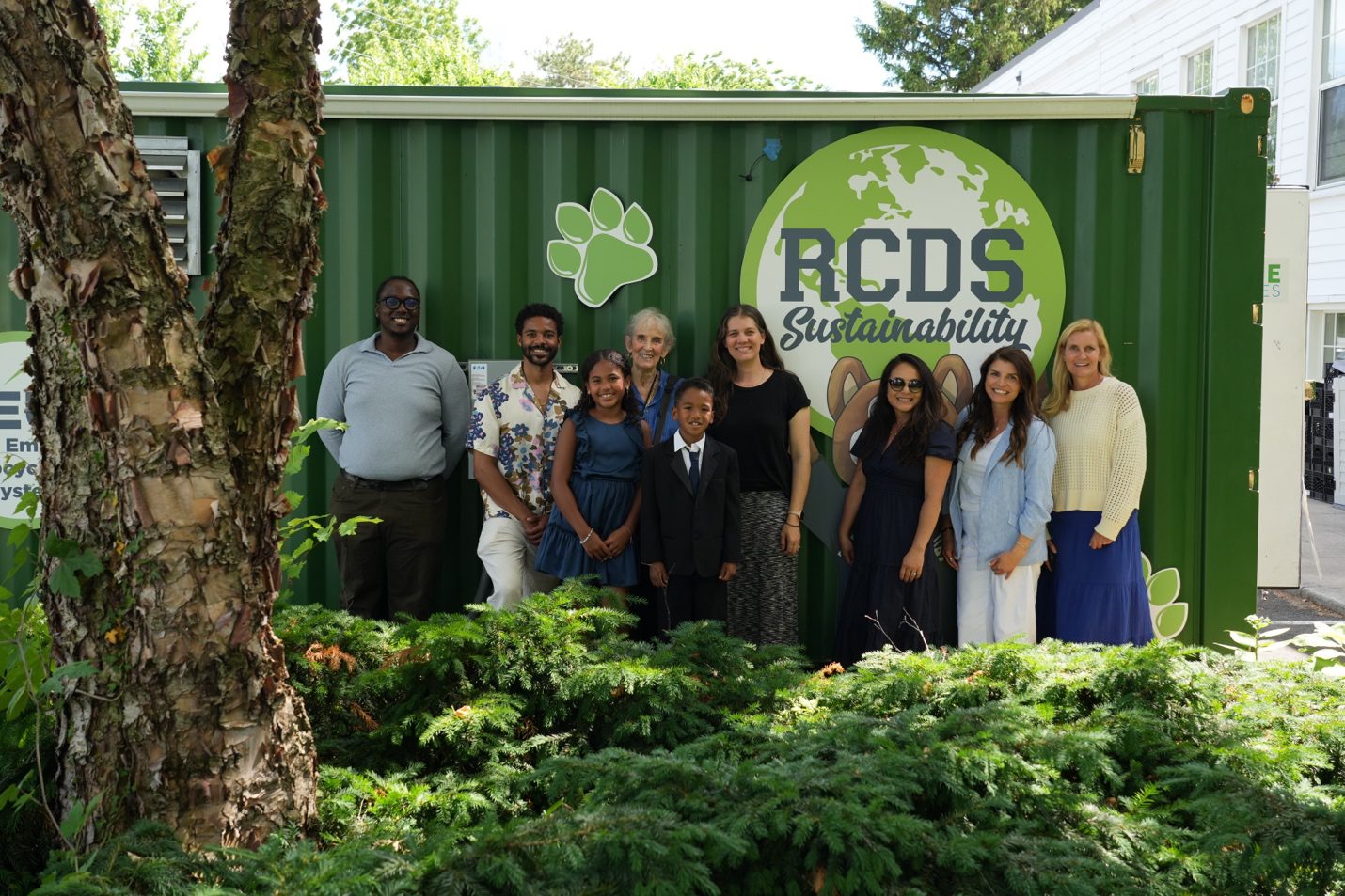
These organic materials are taken to an anaerobic digester located just outside the kitchen. About the size of a single parking space, the unit processes the school’s food waste on site. It is called ZEUS (Zero Emission Upcycling System).
Joanna Underwood, Energy Vision’s Founder and a graduate of Rye Country Day, was invited to come see the digester. “It is an exciting project,” she said, “advancing a critical technology of the future as our country struggles with the dual challenges of waste and climate change.”
The ZEUS digester was built by the Pittsburgh-based firm Ecotone Renewables. Inside the system, these organics are transformed into a liquid plant food called Soil Sauce. It has been certified for organic use by the nonprofit Organic Materials Review Institute (OMRI), ensuring that it complies with the strict standards of the USDA National Organic Program. The plant food is now being distributed to students, families, and employees for use in their home gardens, as well as local garden clubs. Soil sauce is also used in the school vegetable gardens and in classroom science experiments.
The project was undertaken primarily for its educational value to Rye Country Day students. While the plant food is currently being given away, members of the School’s Environmental Club are exploring future opportunities for community use and distribution. Ecotone is also exploring ways to capture and utilize the small amount of biogas generated during the process, which represents approximately 138 tons of CO₂ equivalent annually.
The digester was made possible through a generous gift from parents of Rye Country Day students, and their donation also covered the system’s first year of maintenance. While maintaining the ZEUS digester costs more than the school’s previous composting service, its educational benefits and alignment with the RCDS sustainability initiatives make it a worthwhile investment for any organization with a dedication to environmental stewardship. According to Kerry Linderoth, Director of Sustainability at RCDS, “The anaerobic digester provides students with a hands-on opportunity to learn about food waste, renewable energy, nutrient recycling, and the circular economy. It serves as a living laboratory that supports the school’s commitment to sustainability as a key pillar of education.”

Ecotone Renewables has launched a major five-digester program at the University of Pittsburgh and has deployed an additional eleven digesters across the country. These systems offer an innovative solution for schools, universities, hospitals, commercial kitchens, breweries, small businesses, and other organizations seeking to put their organic waste to productive use. And for interested customers, the company provides an analysis of how sales of Soil Sauce (handled by Ecotone) can make these digester projects profitable.