
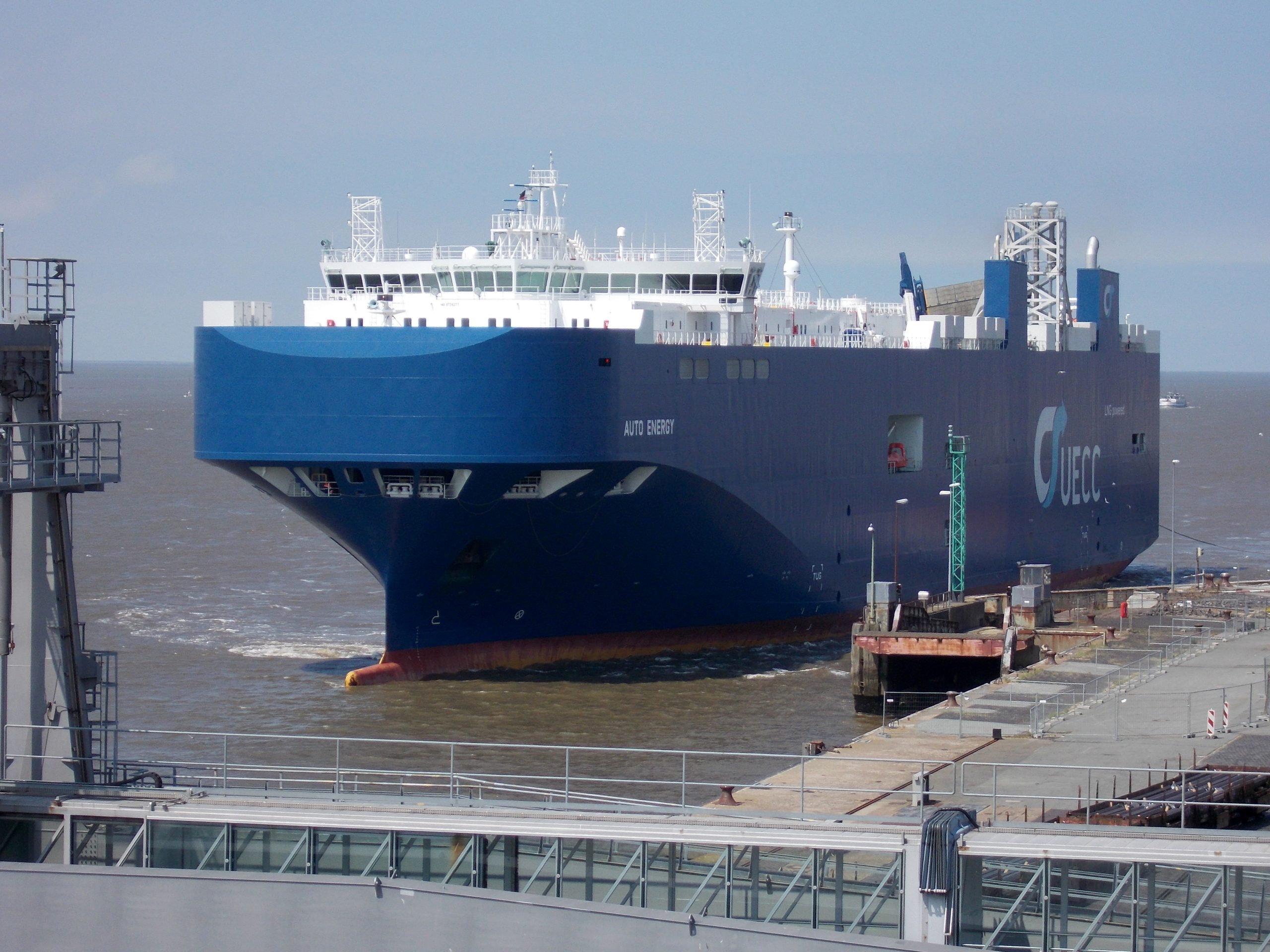
Shipping is the backbone of the global economy, with over 106,000 commercial vessels moving 90% of all internationally traded goods. Maritime is one of the hardest sectors to decarbonize, as ships often travel long distances, have limited onboard fuel storage and refueling opportunities, and need energy-dense fuels. So almost all run on fossil fuels – heavy fuel oil (HFO), marine diesel oil (MDO), and marine gas oil (MGO) – which are relatively cheap but have high greenhouse gas (GHG) emissions.
If the maritime sector were a country, it would rank among the top seven global greenhouse gas emitters.
But in Energy Vision’s new report, The Future of Shipping: Cleaner Fuel Options for the Maritime Sector, we found some major, emerging opportunities to adopt much cleaner fuels, and momentum is growing. Addressing this issue is urgent. The International Maritime Organization (IMO) forecasts that maritime trade could increase 40-115% by 2050 compared to 2020. Furthermore, most of the raw materials and finished goods necessary for the global clean energy transition – from rare earth minerals to wind turbines – will ultimately be transported by ship.
While the maritime capacity that is necessary to carry out the global clean energy transition has often been overlooked or underestimated, it will have to grow substantially, right as pressure accelerates to decarbonize shipping.
A suite of low-carbon alternatives are now gaining real traction for long-distance shipping, although high costs and limited availability remain major hurdles. (See chart below for GHG reductions of each fuel.) These fall into three categories:
- Renewable diesel (RD) and biodiesel are considered “first generation” options. They are made from organic fats and oils, processed with hydrogen under high heat and pressure. These liquid drop-in fuels are compatible with existing engine infrastructure.
- Bio-liquefied natural gas (bioLNG) and biomethanol. These are called “second generation” fuels. Bio-liquefied natural gas (bioLNG) is made by capturing the methane biogases from decomposing organic waste in anaerobic digesters and landfills, purifying them into renewable natural gas (RNG), and then super-cooling it into a liquid fuel. Biomethanol can be made from a wide variety of crops and plant wastes. While both of these fuels require new engines (primarily dual-fuel with diesel), they are increasingly being deployed.
- Green hydrogen, green ammonia, and e-fuels. These “next generation” fuels are made with renewable electricity and captured CO2. Apart from e-diesel, they not only require their own dedicated engines or dual-fuel engines with diesel, but they also face many challenges with cost and scalability.
Regulatory pressure is increasing to speed up the pace of alternative shipping fuel adoption from the European Union and, to a less certain degree, the International Maritime Organization. Out of the over 106,000 commercial ships worldwide, just over 1,300 vessels currently run on alternative fuels such as LNG or methanol. But the totals are rising each year, as are the available volumes of low carbon, bio-based versions of those fuels, such as bioLNG and biomethanol.
Every non-petroleum fuel option involves tradeoffs relative to cost, emissions performance, infrastructure requirements, and scalability.
Low-carbon biofuels, particularly first and second generation options like RD, bioLNG, and biomethanol, offer the most feasible near-term pathways for significant emissions reductions. While they face challenges and tradeoffs, they are available, deployable now, and are already proven at scale on some of the most demanding trade routes in the world. For example, shipping giant Hapag-Lloyd, which transports cargo all over the world, offers customers the option of paying a premium to cut their GHG emissions by having their containers shipped using 25%, 50%, or 100% biodiesel. Maersk, another shipping giant, has invested heavily in both methanol- and LNG-fueled ships, securing contracts for large-scale biomethanol and bioLNG supplies.

Next generation fuels like green ammonia are still years and billions of dollars away from being ready at the necessary scale, but they are expected to grow in importance through the 2030s and beyond as policy support, infrastructure, and markets mature.
Notably, Energy Vision’s report found that fuels derived from food waste and livestock manure – including bioLNG, biomethanol, and green ammonia – provide the deepest lifecycle emissions reductions (see chart below), though at higher costs today than fuels derived from other organic feedstocks.
“Well-to-Wake” Lifecycle Greenhouse Gas Emissions for Each Fuel

The Future of Shipping features case studies of the progress being made in the private sector. Many leading global consumer product companies, including Amazon, Patagonia, and Nestlé, as well as major shippers like Maersk, Hapag-Lloyd, Fortescue, United European Car Carriers, and others are stepping forward, embarking on their own clean fuel programs. Challenges and tradeoffs are prevalent, but so are emerging solutions, including ways to cut problematic “methane slip” (the unintentional release of small amounts of methane during combustion) from LNG engines.
The financial challenge to alternative fuel adoption may be less daunting than it appears, especially when large, high-profile companies choose to take the lead, such as through the Zero Emission Maritime Buyers Alliance (ZEMBA). And shipowners don’t necessarily have to be on the hook for covering all the extra costs.
Energy Vision calculated that a few additional cents per end consumer product shipped could translate into thousands of tons of avoided emissions. For example, we calculated that the costs of one of the more expensive cleaner fuel options for a trans-Pacific cargo shipment could easily be covered by 12 cents per pair of sneakers (given that a typical container can carry ~2,500 shoeboxes) or less than a quarter of a cent per smartphone (since a typical container can carry hold ~100,000 boxed smartphones).
The EU currently has the most stringent maritime decarbonization regulations in the world, with penalties tightening over time for GHG emissions. This is already driving real action in the sector, with orders for alternative-fueled ships rising each year.
But even outside the EU, some form of binding maritime emissions requirements are likely to come in the future. This may come next in other regional/national jurisdictions and eventually at the global level through the IMO. Nevertheless, fleet owners are now facing a fundamental choice: bear the escalating costs of non-compliance – and inherent price volatility associated with petroleum-derived fuels – each year or invest now in vessels that will have much lower emissions over their 30-year operational lifespans.
As Energy Vision’s report makes clear, there is no silver bullet solution; every non-fossil maritime fuel option has its own particular tradeoffs. Ultimately, accelerating maritime decarbonization will require a portfolio approach grounded in first and second generation biofuels alongside continued investment and innovation in next generation alternatives. With the right combination of policy support, private sector leadership, and innovative financing, a cleaner maritime sector is both technically achievable and economically viable.
The Future of Shipping was authored by Energy Vision’s Director of Research and Publications Michael Lerner and Addie Wiener, a 2025 summer intern who was entering her senior year at Vassar College.



.jpg)